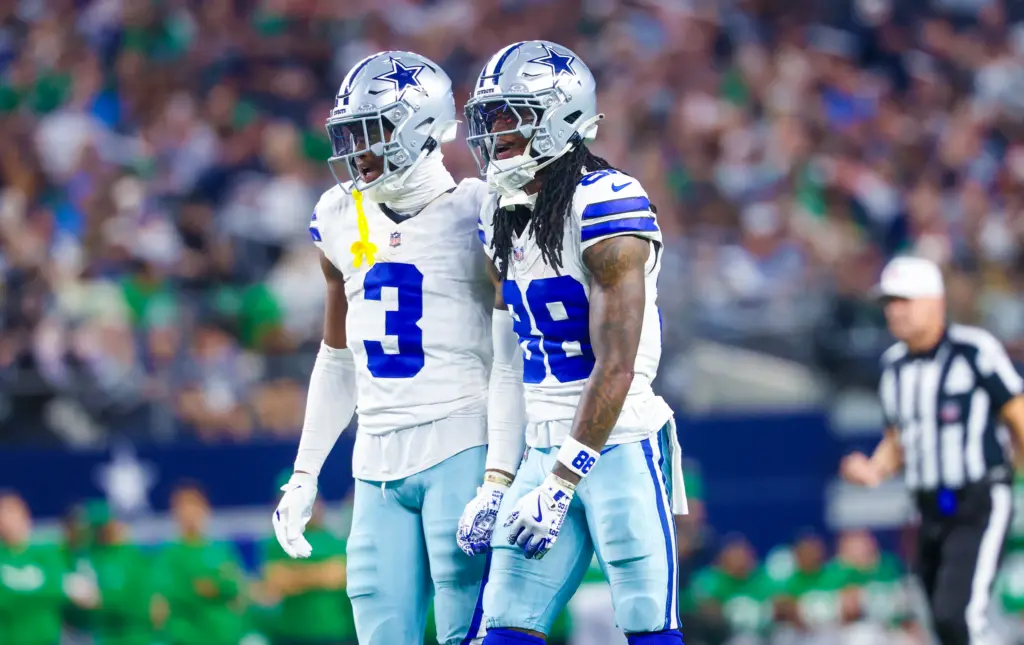
Seven games into the season, the Dallas Cowboys are carrying two receivers who ask different questions of a defense. CeeDee Lamb wins with quick cuts and routes across the middle. George Pickens can attack the sideline and threaten coverage over the top.
Through seven games, Lamb has 53 catches for 651 yards and six touchdowns. Pickens has 37 catches for 485 yards and two scores.
The production is already strong and Dallas can still make the pair harder to defend. That progress follows a quiet opening game, when the Cowboys got little production from the Lamb-Pickens pairing against the New York Giants.
Using George Pickens Would Open Up CeeDee Lamb
Two Receivers, Different Threats
Lamb has drawn 81 targets, while Pickens has seen 58. Together they account for 139 of Dallas’ 266 targets, or 52.3 percent. The combination of Dak Prescott, Lamb and Pickens gives Dallas a strong foundation for its passing attack.
Both receivers are catching more than 63 percent of their targets. Dallas does not need to force more volume toward either receiver. It needs the routes to create better openings for each other.
Their averages point to different strengths. Pickens gains 13.1 yards per catch, while Lamb averages 12.3. Pickens’ longest catch covers 53 yards, and Lamb’s longest covers 49 yards.
Pickens gives Dallas a clear outside threat, while Lamb remains the more frequent option.
George Pickens Can Stretch Safeties
Brian Schottenheimer has said he wants to move Pickens around more. The coach plans to use him in the slot and isolate him near the tight end instead of leaving him at the X receiver spot.
He also wants to build on Pickens’ strength on slants. That flexibility can force a defense to adjust before the snap.
Dallas should keep sending Pickens on vertical routes that force a cornerback to turn and run. When a safety shades toward him, the intermediate middle can open for Lamb.
The 53-yard threat does not need to catch every deep ball to affect coverage. His route can create space for the next read.
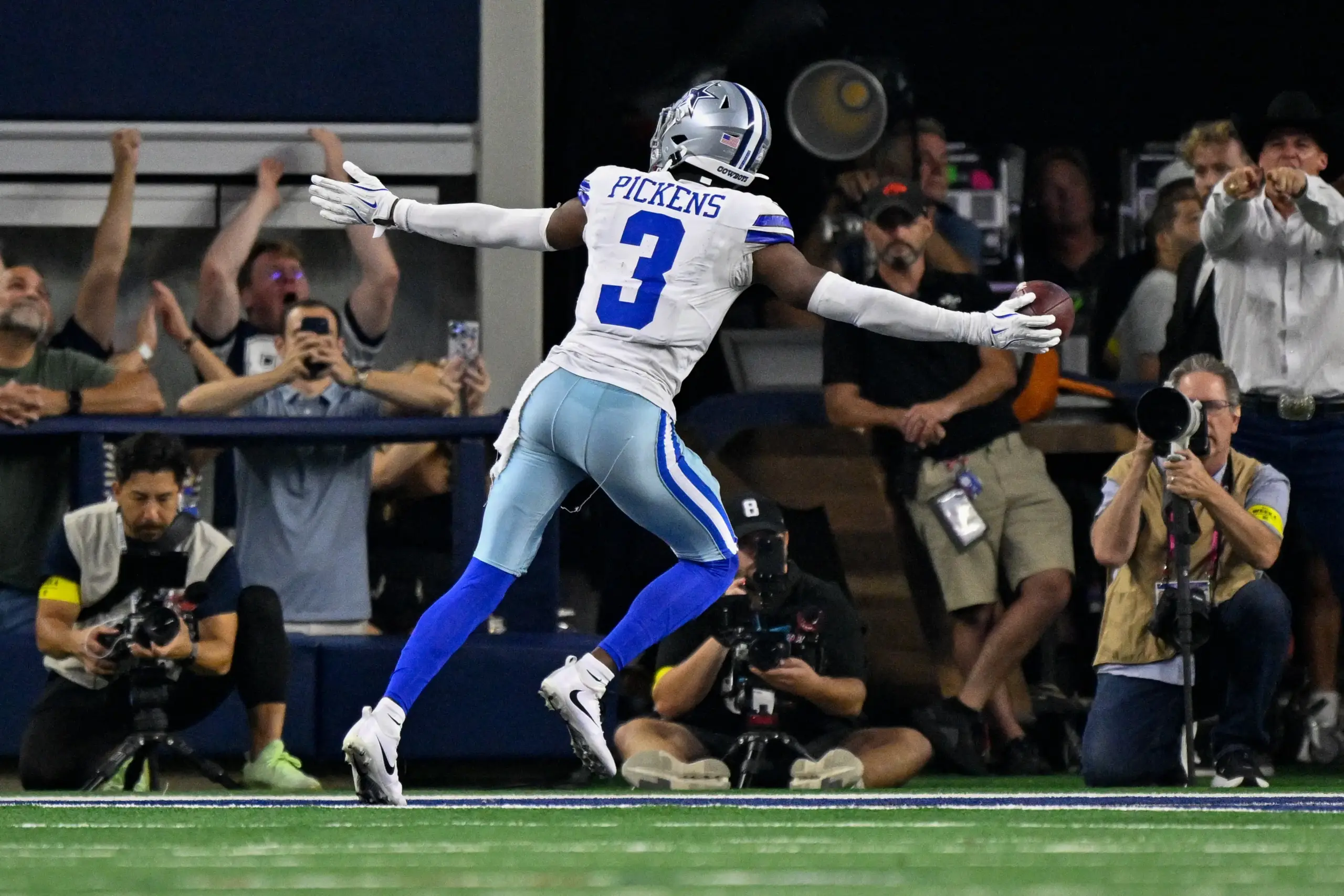
CeeDee Lamb Should Attack Space Underneath
That is where Lamb can help most. Dallas can send Pickens deep while Lamb crosses underneath.
From there, Lamb can run a dig or settle between zones. If a safety stays deep to protect against Pickens, the 651-yard receiver gets a cleaner path across the field. If the safety drives toward Lamb, Pickens may get a one-on-one matchup outside.
The point is to make the defense choose. Lamb has 37 receiving first downs, and Pickens has 26. Both can move the chains.
Better route pairings could give Prescott a faster answer when pressure arrives. However, no route design can replace sound protection.
Brian Schottenheimer Must Keep Both Involved
The coach also wants Pickens to contribute when Dallas runs the ball. Schottenheimer said the receiver must block cornerbacks and safeties because defenders can attack the run when he does not engage them.
That work matters to the same plan. If Pickens is a threat as a blocker and as a receiver, Dallas can use him in more formations without announcing the play.
The Last Word
The Cowboys should not turn Pickens into a decoy or reduce Lamb’s role. Both need to stay involved while Dallas changes where and how they line up. Pickens can stretch coverage, and Lamb can punish the space that opens underneath. That is how the two fit together rather than compete for the same touches.
Dallas already has strong production from its top two receivers. Lamb has 651 yards and six touchdowns, while Pickens has 485 yards and two scores through seven games.
Prescott has thrown for 1,851 yards and 13 touchdowns, completing 65.2 percent of his passes. The next step is making those numbers work together.
If the two can be paired without shrinking either role, the Cowboys get more from a duo that is already producing. Whether Schottenheimer can build that balance is the question the offense carries into the second half of the season.
Main Image: Kevin Jairaj-Imagn Images