The Dallas Cowboys have had to make up for a defense that lets opponents stay on the field. A lack of third-down stops have extended drives and forced the offense to carry more pressure.
That changes the job of the offense. Scoring quickly matters, but so does keeping the opposing quarterback on the sideline. The Cowboys entered the Philadelphia Eagles game after two defeats, which raised questions in the pre-game matchup coverage. Jerry Jones has argued for a different approach, and the reason matters beyond the rushing numbers.
Why Jerry Jones’ Vision for a Ground Game Requires a Safe and Balanced Approach
Running Protects Cowboys’ Defense
Jones says a productive run game lets Dak Prescott take more snaps under center and gives defenses another problem. Dallas also needs longer possessions to shorten the game and give its defense time to recover. A long series can drain the clock and delay the defense’s next return to the field.
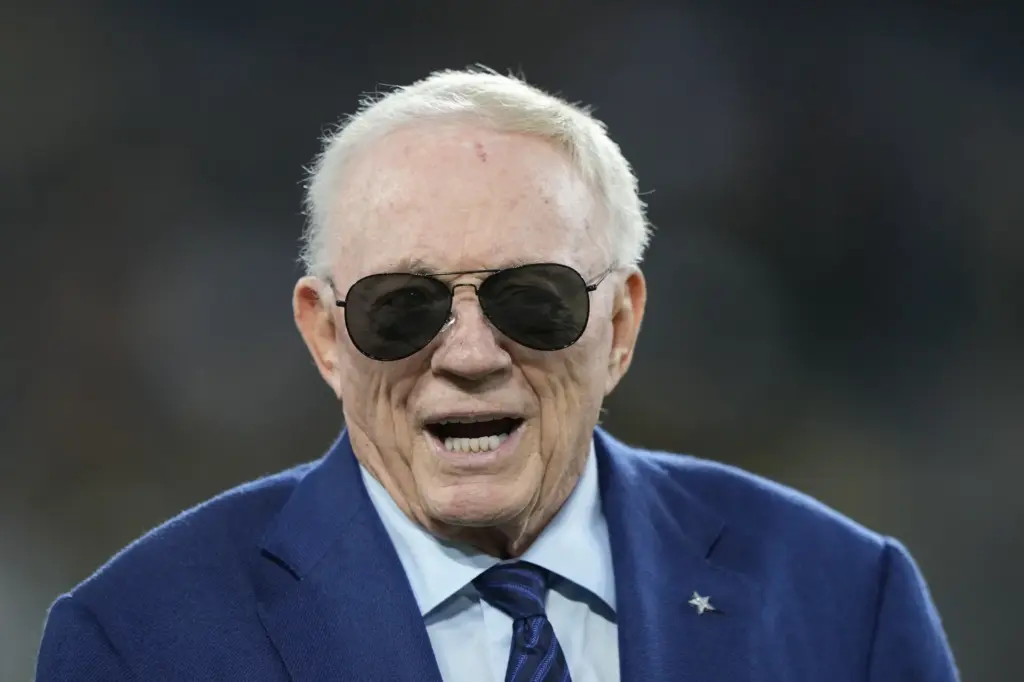
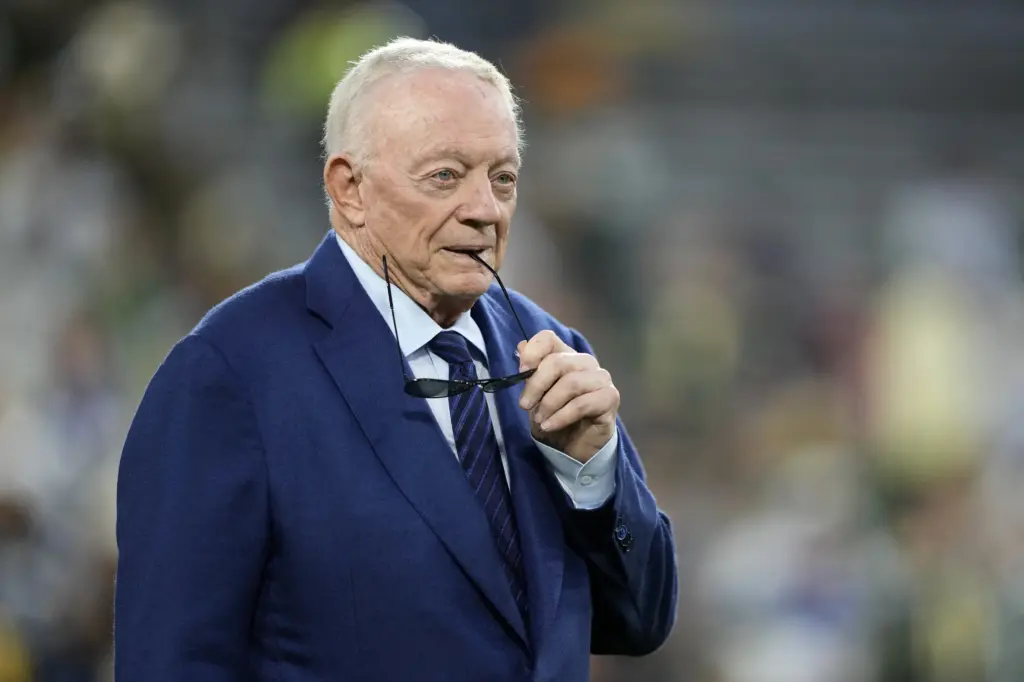
“That lets us have the opportunity to get Dak under center a lot more, and that’s a big key too,” Jones said. “That presents a different defensive challenge for the opponent if he can get under center a lot. We saw that happen exceptionally well.”
“The answer is play like we played on the offensive side of the ball,” Jones added. “That is our answer. The defense is really not where we expected it to be, but we can win and we can get where we want to go with that offensive side of the ball. And that’s where we’ve got a real emphasis on proven players that can do things that we know how to do. We also have an outstanding offensive play caller in our head coach. And that’s our strength.”
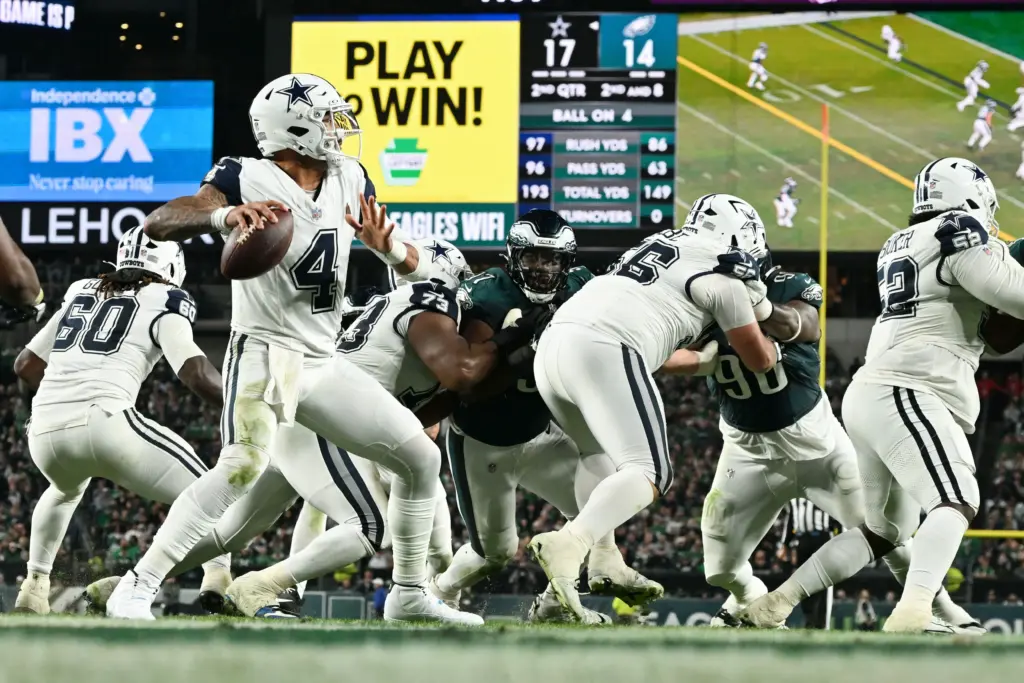
Philadelphia still gained 321 yards and scored 21 points. The Eagles started backup Tanner McKee, were without DeVonta Smith, and had an injured Saquon Barkley. One third-quarter drive covered 84 yards in 17 plays and took more than nine minutes.
That drive showed the cost of failing to get off the field. Dallas allowed opponents to convert 52.9 percent of third downs, the league’s worst rate. Longer Cowboys possessions limit defensive snaps, but cannot fix missed tackles or coverage busts. Those problems were already clear in Dallas’ Week 6 defensive concerns.
Possession Must End With Points
Running does little if Dallas keeps punting. The goal is to stay ahead of the chains, not hand off just to satisfy a label. A short gain keeps Prescott’s options open, while a loss can force a predictable pass.
Dallas gained 204 rushing yards in Philadelphia, but the approach only matters if the line creates space and drives end in touchdowns. A 10-play drive that ends in a field goal may use the clock, but it still gives the opponent a chance to take the lead with one scoring possession. Dallas needs the run to help finish drives, not just extend them.
Dallas Still Needs Its Passing Game
Prescott, CeeDee Lamb and George Pickens account for about $90 million in combined salary-cap charges. Dallas has too much invested in passing to treat it as a last resort.
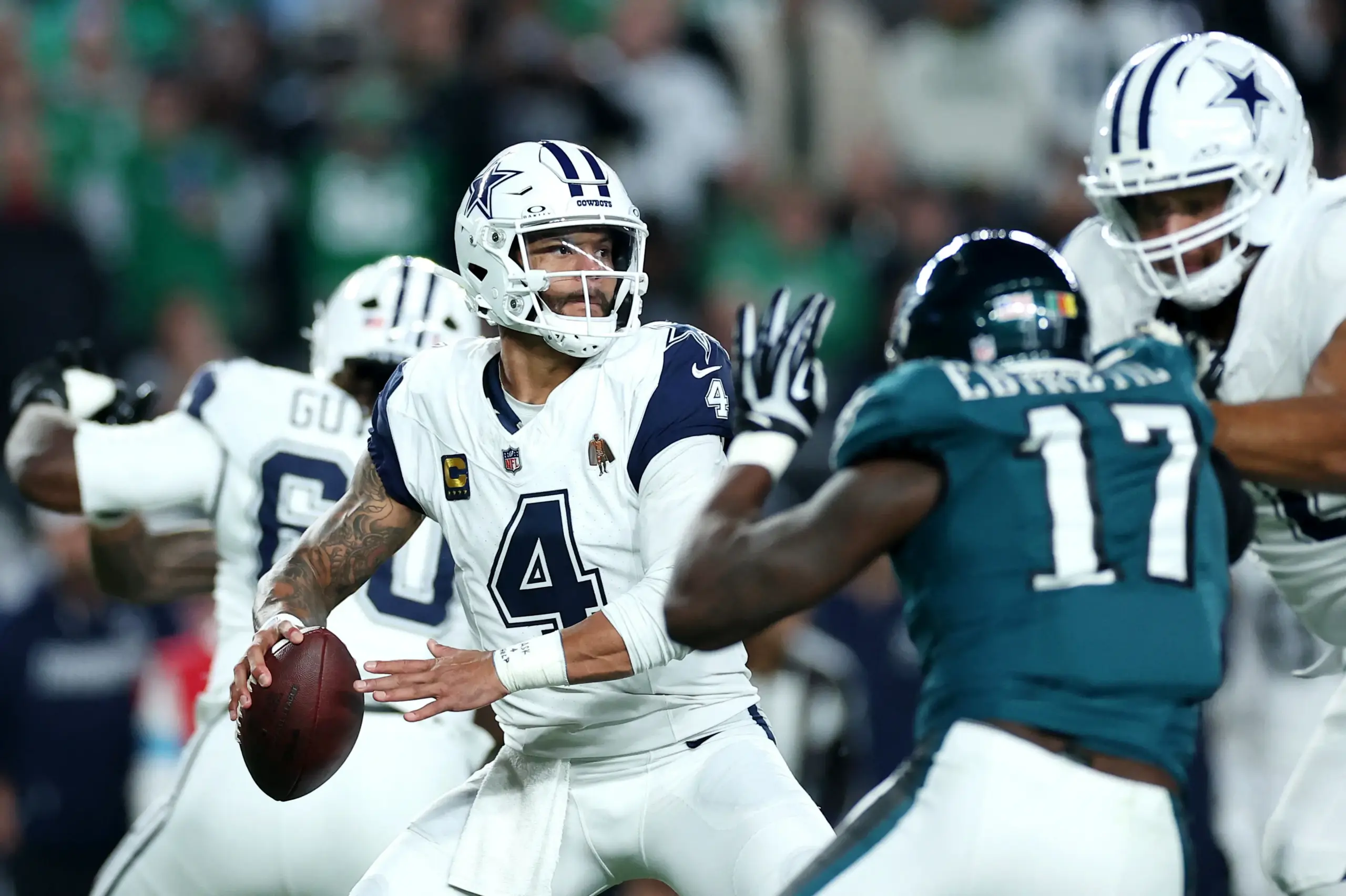
If defenses crowd the line, Prescott must throw outside. Lamb can win underneath, while Pickens can stretch the field. Prescott’s standing in the 2026 quarterback rankings reflects his value. Balance means taking the easiest option the defense gives Dallas. The run-first label becomes a problem only when it stops the quarterback from using a favorable matchup.
One Win Does Not Set Rule
The Philadelphia game showed that the ground attack can work, but opponents will adjust. Schottenheimer must read the defense instead of following a fixed run count.
Jones’ larger point is sound. Dallas needs to control the pace when its defense struggles. That problem also shapes the larger question of whether Jones is building a contender or chasing a playoff spot. The goal is control, not a run-first identity for its own sake.
The Last Word
Jones is right to make the run game a priority because Dallas’ defense has not earned the right to rely on quick possessions. The Cowboys should use runs to manage the clock and give the defense time to recover. However, the ground game cannot keep Prescott from taking open throws.
Dallas has invested too much in its quarterback and receivers to limit them when opponents crowd the line. Run when the defense gives space and pass when it takes that space away. Both choices should help Dallas control the game.
Main Image: Jeff Hanisch-Imagn Images