Dallas Cowboys entered Monday’s game against the Philadelphia Eagles having scored 29 points across losses to the Tampa Bay Buccaneers and the Green Bay Packers. Through six games, its running game averaged just 76 yards per outing, leaving Dak Prescott with a heavy passing load.
That 38-21 win changed the mood, but it did not settle the question. Did Brian Schottenheimer find a plan Dallas can repeat, or did one strong night hide the same weaknesses that had stalled the offense?
Cowboys Win But Questions Still Remain About Offense
Brian Schottenheimer Needs Repeatable Offensive Production
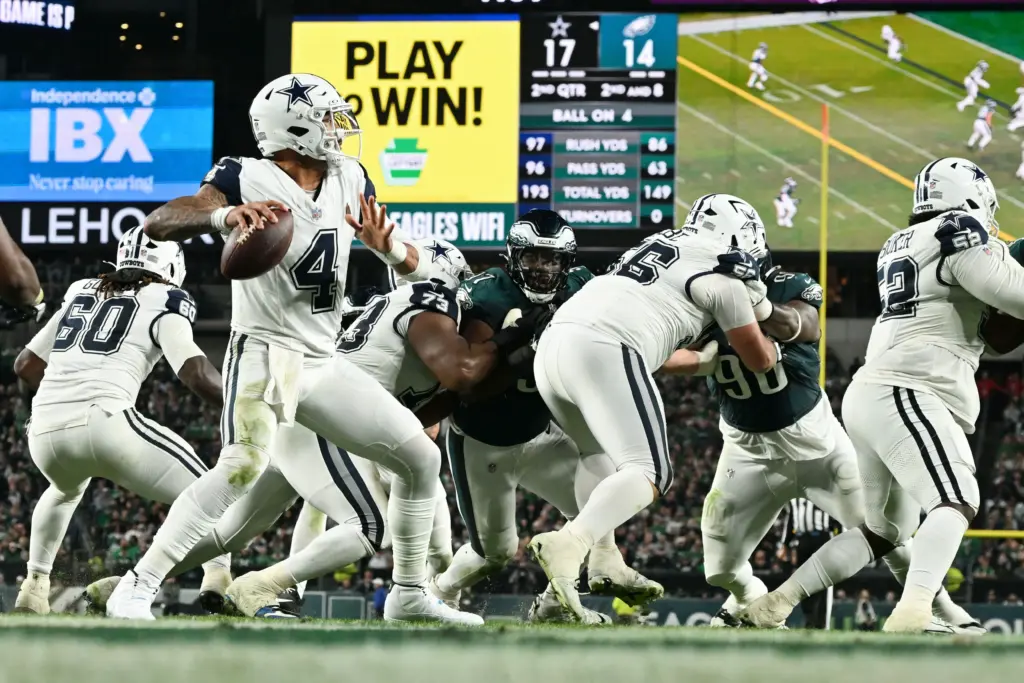
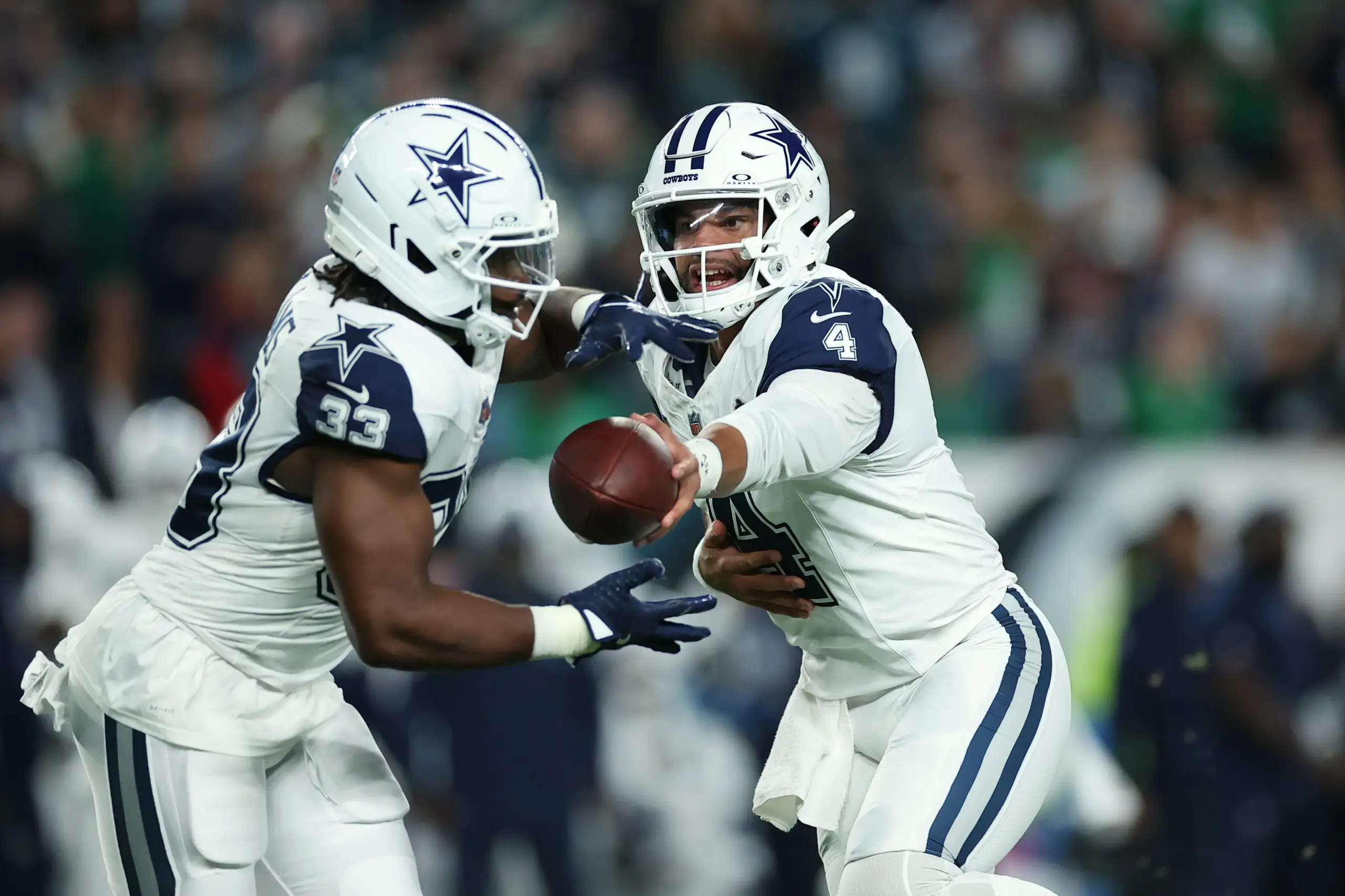
Dallas won with a more balanced attack. The Cowboys ran 38 times for 204 yards, passed 27 times, and allowed no sacks. Javonte Williams carried 25 times for 155 yards, while Prescott threw three touchdowns without an interception. Dallas scored on seven of nine possessions.
The offense had shown a higher ceiling in the Houston comeback, then scored just 29 points across its next two losses. That contrast makes the point clear. Dallas can produce, but Schottenheimer has to make that production repeatable. Philadelphia also played without Jalen Hurts and other key players, so Monday’s win cannot settle the debate.
Cowboys Finally Used Run As Weapon
Through six games, Dallas ranked 31st in rushing yards and called pass plays on about 71% of its offensive snaps. That approach made the offense easier to read and asked Prescott to solve too many problems with his arm.
Against Philadelphia, Dallas kept running even when early gains were small. The offensive line held up, Williams finished with a career-high 155 yards, and Prescott was not sacked. He threw for 212 yards and three touchdowns. George Pickens caught a touchdown, while CeeDee Lamb scored twice. Dallas need not become a run-only offense. It must stop relying on the pass for every possession.
Two Losses Showed Cost Of Imbalance
Dallas scored 16 points against Tampa Bay and 13 against Green Bay. Prescott threw two interceptions in each game. He attempted 42 passes against Tampa Bay, then 54 against the Packers, as Dallas fell behind and tried to catch up.
Game script matters. A team trailing by multiple scores has to pass more often, but Dallas cannot ignore how it gets behind. Green Bay led 17-0 at halftime after two costly second-quarter interceptions. The heavy passing volume became a response to the hole, not a reliable way out of it.
Schottenheimer needs answers before a game reaches that point. If the offense starts slowly, he must create easier throws and keep the team on schedule rather than let defenders sit on the passing game.
One Win Does Not Prove Problem Is Fixed
Philadelphia was without its starting quarterback, Hurts, and other injuries weakened the matchup. Dallas still produced 416 yards and scored on seven of nine possessions. Philadelphia’s absences limit the test, but they do not erase Dallas’ execution. The Cowboys must repeat this approach against healthy opponents before calling it a fix.
Schottenheimer should not chase a fixed run-pass split. He should keep Williams involved, give Prescott quicker answers under pressure, and adjust when defenses take away the first read. Arizona visits Sunday, giving Dallas an immediate chance to show whether Monday changed its habits or only its result.
The Last Word
Dallas should treat the win over Philadelphia as a standard, not a verdict. Williams needs steady carries even when early runs fail to produce big gains, keeping the offense from becoming too dependent on Prescott.
The next game against Arizona provides another test, but the more revealing moment will come when a defense removes Dallas’ first option and forces the offense to adjust.
Prescott has thrown for 1,851 yards, 13 touchdowns and five interceptions through seven games. Schottenheimer must build a plan that uses that passing ability without asking him to carry the entire offense.
Main Image: Eric Hartline-Imagn Images