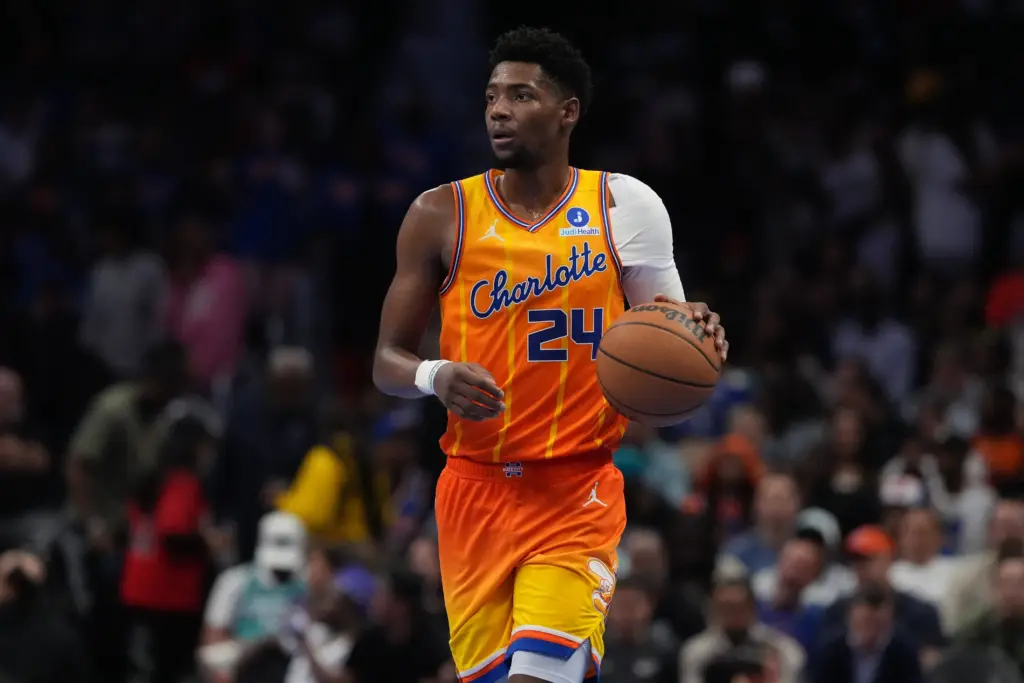
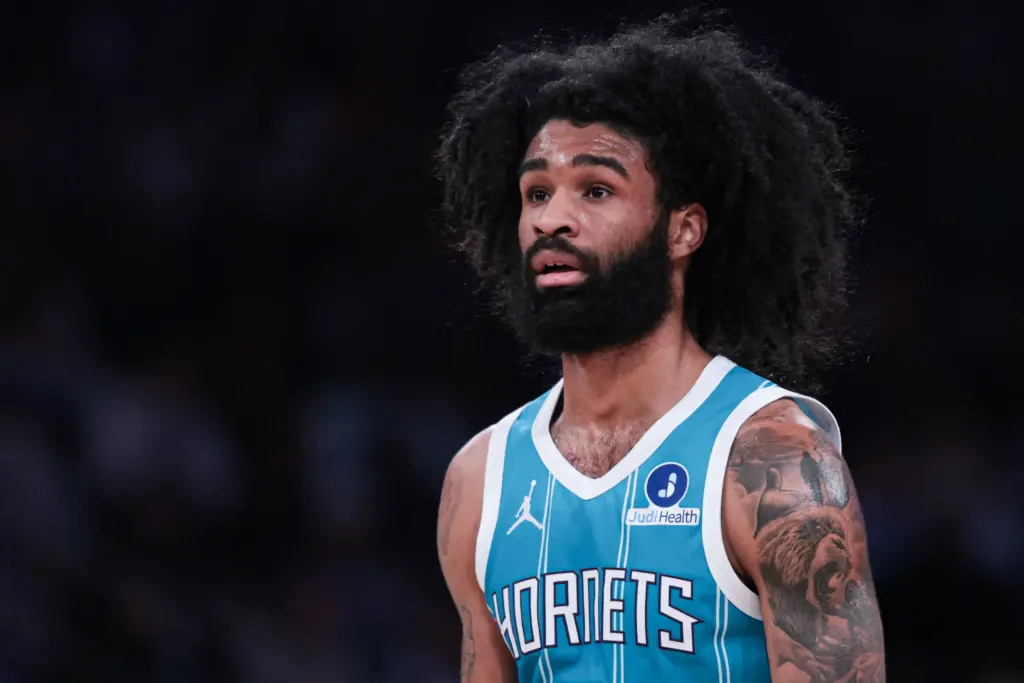
Coby White‘s transition to a lead playmaker is a defining narrative of the Charlotte Hornets‘ new era. Following a massive roster shake-up, the former Chicago Bulls standout has been tasked with proving his elite scoring can translate into facilitating for his teammates.
Entering a pivotal multi-year contract, White faces intense scrutiny over his ability to run a half-court offense. The core question for the franchise for the 2026-27 season is this: can the team count on White’s playmaking ability to effectively distribute the basketball and get others involved now that LaMelo Ball is out of the picture?
Coby White’s Playmaking Ability Takes Center Stage
The Evolution from Combo Guard to Facilitator
For the majority of his NBA tenure, White was defined primarily as an athletic, scoring-minded combo guard. Drafted out of the University of North Carolina in 2019, his early seasons were characterized by his lethal three-point stroke and end-to-end speed. However, becoming a lead floor general demands a completely different skill set, one that prioritizes court vision, pick-and-roll pacing, and basketball IQ.
During his recent campaigns, there have been undeniable flashes of growth. White has consistently showcased a better feel for reading opposing defenses. His assist-to-turnover ratio has steadily improved, and White has demonstrated a growing capacity to make quick, decisive reads out of double teams. He has shown the ability to drive, draw help defenders, and kick the ball out to open shooters, proving that White’s playmaking ability can orchestrate an offense when he is fully locked in.
Statistical Reality: Passing Metrics and Impact
Looking strictly at the raw numbers, White’s assist statistics reflect his evolution. Historically hovering around four or five assists per game in his peak seasons, some critics argue these figures peg him a secondary playmaker rather than a pure floor general.
However, looking strictly at raw assists can be misleading. White’s ability to collapse the paint forces rotations that generate “hockey assists” or open-shot opportunities for teammates further down the line. Not only that, but when analyzing his recent performances, there is a clear upward trajectory in his pick-and-roll execution. His willingness to deliver timely pocket passes to rolling bigs and whip skip passes to corner shooters highlights why White’s playmaking ability can succeed in the modern NBA.
The Offensive Threat: How Scoring Opens Up Passing Lanes
One of White’s greatest assets as a lead playmaker is his own gravity as a scorer. White is a lethal shooter from beyond the arc and possesses blistering first-step speed, meaning opposing defenses are forced to respect his scoring ability at all times.
Because teams are so terrified of his three-point pull-up and his penetration to the rim, they frequently overcommit on his drives. This allows White to exploit those overaggressive defenses. By demanding the attention of multiple defenders, White creates passing lanes that wouldn’t exist for a less potent offensive player. When the defense collapses, he is becoming increasingly adept at firing accurate passes to open teammates, turning his individual scoring threat into high-percentage looks for his roster.
The Challenges of Running the Offense
Despite his improvements, White still faces natural growing pains in his transition to being the primary decision-maker. One of the primary criticisms levied against him is his tendency to get tunnel vision when looking for his own shot during high-pressure moments. True lead guards are expected to manage the tempo of the game and get their teammates involved early, something that is still a work in progress for White.
Additionally, learning to control the pace of a game is a skill that typically takes years for traditional scorers to master. At times, White plays at one speed, blazing fast. While this pressure transition offense is highly effective, running a half-court set requires a more methodical approach. Unlocking White’s playmaking ability means learning when to push the tempo and when to slow things down, run a specific play, and settle his team into their offense.
A New Era: The Perfect Proving Ground
The franchise’s roster shake-up perfectly positions White to take the reins. With promising young talents flanking him on the wings, White has an excellent cast of shooters and slashers to feed. The organization’s deep trust in a blueprint centered around White’s playmaking ability is further highlighted by the multi-year contract extension the Hornets awarded him.
This financial and cultural commitment provides White with the ultimate vote of confidence. In an environment focused on development and building a new identity, he will be granted the minutes and the leeway to make mistakes, adjust, and grow into the role of a true floor general.
The Verdict
Ultimately, while White will likely never become a traditional, pass-first maestro in the mold of a Chris Paul, he has all the physical tools and offensive gravity required to succeed. His ability to score forces defensive adjustments, and his continuous growth as a pick-and-roll passer shows undeniable promise.
As teams adjust to preparing for his presence on the floor, the focus will be less on whether he can rack up double-digit assist numbers, and more on whether White’s playmaking ability can consistently generate winning basketball plays. With his work ethic and continued development, White is more than capable of rising to the challenge and proving he is far more than just a scorer.
Main Image: Vincent Carchietta-Imagn Images