November brings college football rivalries into focus as conference races and postseason ambitions approach their final tests. These five matchups on the 2026 schedule combine longstanding traditions, historic trophies and regional bragging rights. Their championship implications depend on the standings, but defeating a familiar rival gives each game significance beyond its place on the calendar.
November Rivalry Games
1. Michigan and Michigan State Contest the Paul Bunyan Trophy
Michigan hosts Michigan State on November 7, with the Paul Bunyan Trophy awarded to the winner. The annual contest matters beyond conference standings because both teams compete for recognition within the same state, giving supporters a direct comparison between the programs.
Michigan has maintained greater national prominence in recent seasons, while Michigan State continues working toward renewed competitiveness. Their meeting adds a specific result to that broader assessment, with the Spartans seeking a rivalry victory and the Wolverines defending their home field.
One result does not establish either program’s long-term direction. Conference performance, roster development and results across the full schedule provide the wider context. Winning this matchup nevertheless supplies a distinct achievement: defeating the other major Big Ten program in Michigan and securing possession of the trophy.
For supporters, that prize gives the result significance beyond its effect on the standings. The winner carries the Paul Bunyan Trophy into the next meeting, while the losing team waits for another opportunity to reclaim it. The game’s place early in November also leaves both programs with further assignments before their regular seasons end.
2. California and Stanford Renew the Big Game
California hosts Stanford on November 21 for the Big Game, with the Stanford Axe awarded to the winner. The rivalry dates to 1892, giving the matchup traditions that remain meaningful regardless of conference standings or national recognition.
Cal and Stanford meet as ACC opponents, adding a conference result to their rivalry. For readers following NCAAF betting, player availability, recent production and venue provide the basis for assessing the matchup. Its historical significance does not establish that the outcome is inherently less predictable.
The rivalry includes the 1982 finish known as “The Play,” when California scored on a kickoff return involving multiple laterals. That ending remains a defining episode in Big Game history, while possession of the Axe gives each subsequent meeting a tangible prize.
Victory supplies either team with a distinct achievement, even without postseason consequences. Defeating a familiar opponent and keeping the trophy until the next meeting gives supporters something lasting to celebrate beyond the result’s effect on the standings.
3. Texas and Texas A&M Revive a Rivalry
Texas visits Texas A&M on November 27 for the Lone Star Showdown, renewing a rivalry that returned in 2024 after a 13-year absence. The programs now meet as SEC opponents, adding a conference result to their longstanding competition for statewide bragging rights.
The late-November placement gives the matchup relevance near the end of the regular season. Its championship and postseason implications depend on the standings entering that weekend, while the rivalry supplies a separate incentive for both teams. Winning at Kyle Field would give Texas a road victory; Texas A&M has the opportunity to defeat its rival at home.
Recruiting provides another connection between the programs because both pursue prospects across Texas. That shared territory contributes to the rivalry’s visibility, although one game does not determine recruiting decisions or establish either program’s long-term direction. Results across the season offer a broader measure of progress.
The 2026 meeting adds another chapter to the rivalry’s return as an annual conference matchup. Earlier games establish its history, but the current players must settle this edition on the field. For supporters, the result provides a direct comparison between the teams and bragging rights that last until their next encounter.
4. Minnesota and Wisconsin Battle for the Axe
Minnesota visits Wisconsin on November 27 at Camp Randall Stadium, with Paul Bunyan’s Axe awarded to the winner. First presented in 1948, the trophy gives this longstanding border rivalry a prize that remains meaningful beyond the teams’ conference positions.
The matchup also supplies a late-season Big Ten result. Conference standing and bowl eligibility depend on each team’s record entering the game, so those stakes require assessment closer to kickoff. For both programs, defeating a familiar opponent adds a distinct achievement to the completed regular season.
Readers following FanDuel NCAAF expert analysis have several concrete areas to examine before the meeting. Rushing efficiency, pass protection and defensive performance help describe the matchup alongside confirmed player availability. Those details provide a stronger basis for evaluating the teams than assuming their current approaches follow historical reputations.
For supporters, possession of the axe preserves the result long after the final whistle. The winner keeps the trophy until the next meeting, making the November contest both a conference assignment and a competition over a shared tradition. Its Thanksgiving-weekend placement adds to the occasion as both teams close their regular-season schedules.
5. Iowa and Nebraska Settle a Border Rivalry
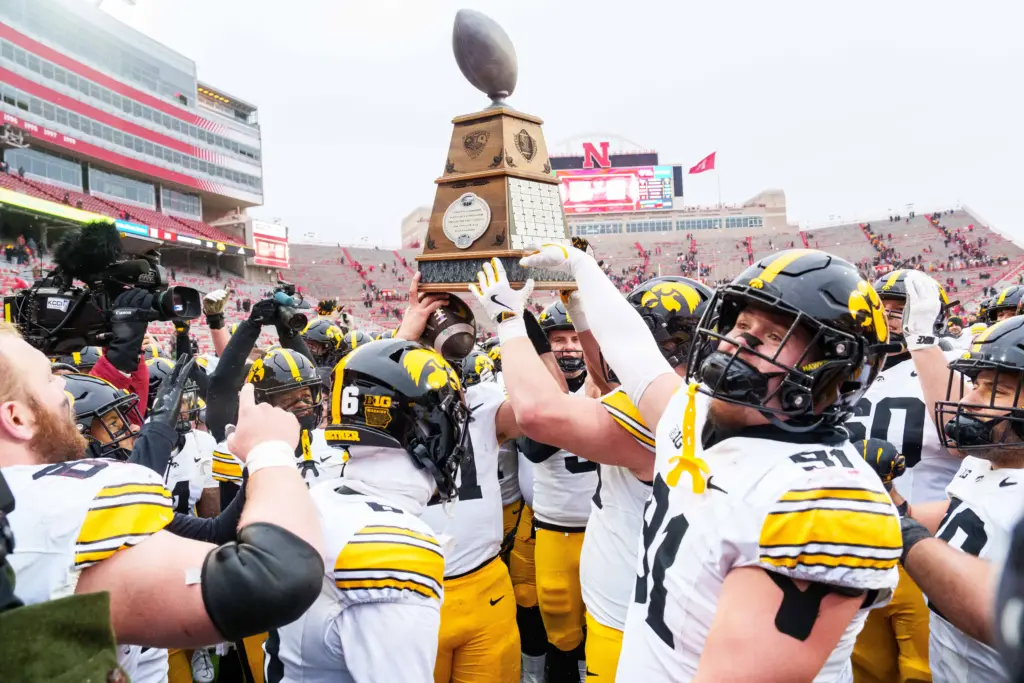
Iowa hosts Nebraska on November 27 at Kinnick Stadium, with the Heroes Trophy awarded to the winner. Introduced in 2011 when Nebraska joined the Big Ten, the trophy adds a formal prize to the Thanksgiving-weekend matchup between neighboring programs.
The game closes both teams’ regular-season schedules, giving each a final opportunity to add a conference victory. Bowl eligibility and championship implications depend on their records entering the weekend. Those standings establish the immediate stakes, while defeating a familiar opponent gives supporters another reason to follow the contest.
The football assessment begins with how each team creates and prevents scoring opportunities. Field position, turnovers and third-down execution help explain whether an offense sustains drives or leaves its defense protecting short fields. Current performances and available personnel provide a clearer picture than either program’s historical reputation alone.
Winning the Heroes Trophy gives the result a lasting place beyond the standings. The successful team keeps the prize until the next meeting, while both programs carry the completed performance into their offseason assessments. Even without championship implications, the matchup settles another edition of their border rivalry.
Rivalry Results Leave Lasting Impressions
November’s standings will establish the conference and postseason stakes, but these rivalries also offer rewards beyond championship contention. Winning a historic trophy or defeating a neighboring program gives supporters a result to celebrate until the next meeting. That lasting significance makes each matchup an important part of how the 2026 season is remembered.
Main Image: Dylan Widger-Imagn Images