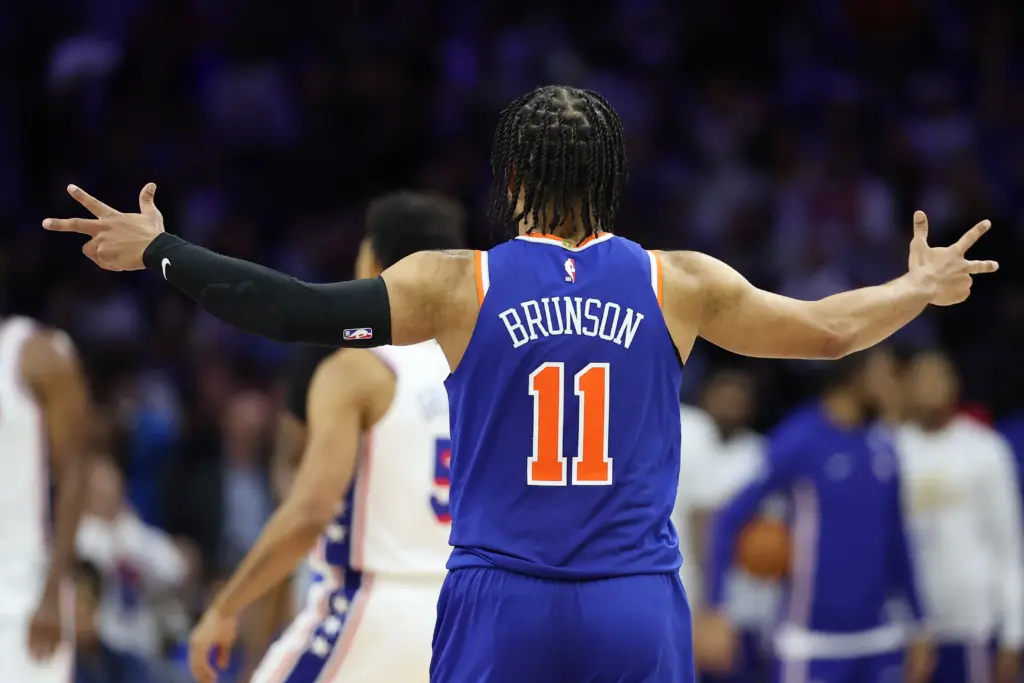
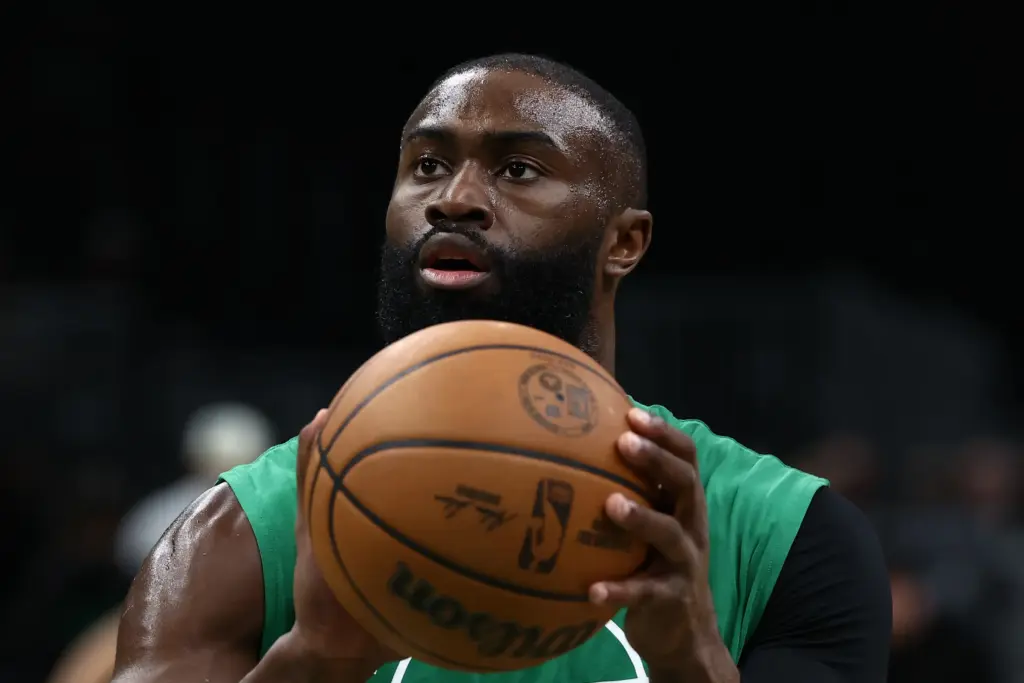
The stunning Jaylen Brown trade between the Boston Celtics and Philadelphia 76ers completely shook up the NBA. At this point it’s more surprising when a day goes by that there’s NOT a blockbuster trade to talk about during this wild offseason. Boston traded away the All-Star Brown in exchange for veteran Paul George, two first-round picks, and two second-round picks. Let’s evaluate why Boston made this baffling move and how it alters both franchises.
Analyzing the Jaylen Brown trade
The Anatomy of the Jaylen Brown Trade
The deal, first reported by ESPN’s Shams Charania, has left league executives stunned and sparked immediate debates about which front office actually won this massive Eastern Conference transaction. Trading a former Finals MVP that is in his prime to a rival team is certainly…questionable, but we’ll get to that in a second.
To fully understand the Brown trade, one has to look at the deteriorating relationship between Brown and the Boston front office. Rumors of Brown’s potential departure began to swirl earlier in the offseason when the Celtics aggressively shopped the two-time All-NBA selection in a failed bid to acquire Giannis Antetokounmpo from the Milwaukee Bucks. Even after the Giannis trade fell through and he landed with the Miami Heat, Boston continued to shop Brown across the league. Although Brown had three years remaining on his massive $57+ million annual supermax contract, the ongoing trade rumors created an irreparable fracture between the player and the franchise.
What Are the Celtics Doing?
From a Boston perspective, trading the 29-year-old Brown after his best statistical season, where he averaged 28.7 points, 6.9 rebounds, and 5.1 assists, for a 36-year-old George is baffling. George has regressed over recent seasons, as Father Time may be beginning to catch up to the veteran. Not only that, but he is owed an exorbitant $54.1 million for the upcoming season, with a $56.6 million player option the following year.
Many league executives, including an anonymous general manager heavily criticized the return, referring to the move as “highway robbery” for Philadelphia. The Celtics originally sought a massive haul of four first-round picks in exchange for Brown, but after a week of shopping him, their leverage seemingly dried up. By accepting George and significantly less draft compensation than initially demanded, it appears the Boston front office was more eager to clear the air and move on from the Brown era than they were to maximize their return on the trade market. In my opinion, Boston lost this trade and it wasn’t even close to being even.
A Franchise-Altering Addition for Philadelphia
So this clearly means that I have the 76ers as the winners of the Brown trade. For Philadelphia, acquiring Brown immediately puts them into title contention. While some analysts have tried to downplay Brown’s value, his track record as a proven two-way player and a legitimate closer speaks for itself. Brown brings reliable scoring, elite perimeter defense, and crucial playoff experience to Philadelphia.
By pairing Brown with established stars like Joel Embiid and Tyrese Maxey, the 76ers immediately cement themselves as top-tier contenders to dethrone the New York Knicks. In addition to that, Brown’s age aligns perfectly with the primes of Embiid and Maxey, giving Philly an incredibly potent core for the foreseeable future. The fact that the 76ers were able to acquire a player of Brown’s caliber by offloading an aging George and a few future draft picks will likely go down as one of the best front office heists of the decade.
Future Fallout in the Eastern Conference
The Brown trade fundamentally alters the landscape of the Eastern Conference. Philadelphia has drastically improved its roster without gutting its future, making them a nightmare matchup for any team in the playoffs. The Celtics, on the other hand, are entering a heavily scrutinized rebuilding or retooling phase.
Whether the Celtics have a secondary master plan remains to be seen. However, as it stands today, trading a superstar who helped deliver a championship just two years ago in exchange for a declining veteran and a pair of first-round picks carries a massive risk. The pressure will be squarely on Celtics management to prove that this move frees up cap space and allows them to navigate the rigid constraints of the new collective bargaining agreement effectively.
The Brown trade will certainly be scrutinized for years. Philadelphia capitalized on a fractured relationship in Boston to add an elite two-way star. Meanwhile, the Celtics are taking a massive gamble, hoping that clearing the air and adding a veteran like George will pay dividends despite sacrificing one of their most valuable assets, if not the most valuable.
Main Image: Winslow Townson-Imagn Images