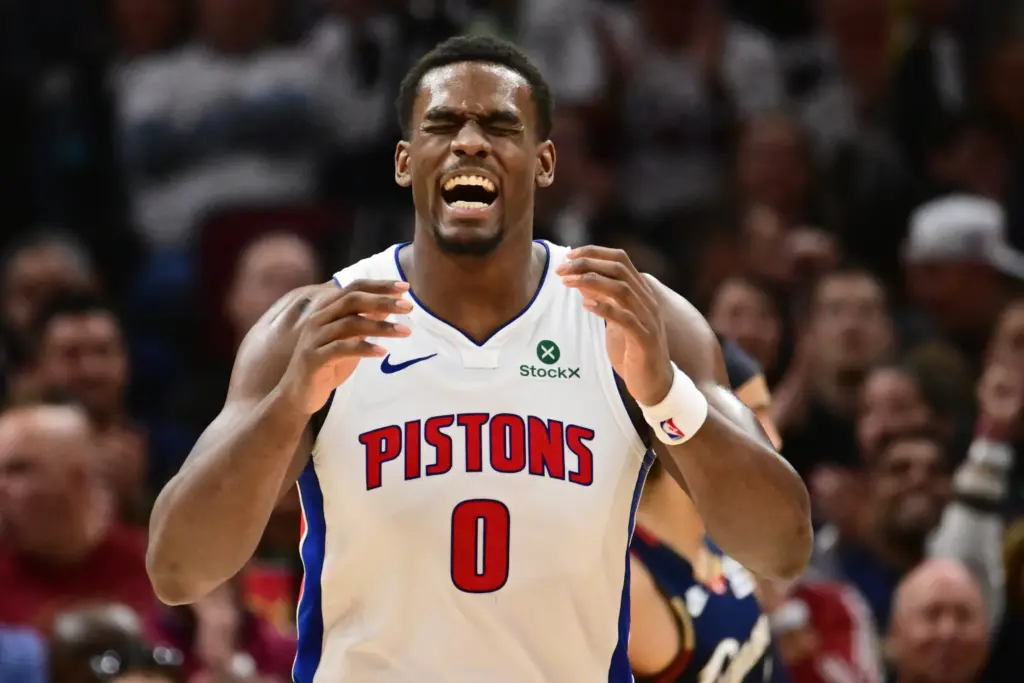
The 2025-26 NBA regular season was a dream for Detroit Pistons fans, largely powered by the meteoric rise of Jalen Duren. The 22-year-old center finished with his first ever All-Star nod, averaging an impressive 19.5 points and 10.5 rebounds on 65 percent shooting, anchoring the Pistons to a top-seed in the East.
However, the Pistons are currently one postseason loss away from turning that dream into a nightmare, with Duren being the primary reason to be brutally honest. Through the first 12 games of the postseason, Duren has seen his scoring output cut nearly in half, with his efficiency plummeting. He is averaging 10.1 points and 8.3 rebounds, while only shooting 50% from the field. Here is a breakdown of what has gone wrong for Duren during his postseason struggles.
Breaking Down Jalen Duren’s Postseason Struggles
The Disappearing Offensive Efficiency
The most glaring issue has been Duren’s inability to maintain his high-percentage finishing under playoff pressure. In the regular season, he was a force of nature, with 95% of his shot attempts coming within 10 feet of the basket. In the playoffs, that same rim-pressure has vanished.
Duren has seen his field goal percentage drop by 15% compared to the regular season and is really struggling against elite rim protectors like Cleveland’s Jarrett Allen and Evan Mobley. Duren has really struggled to find easy scoring opportunities, often looking rushed or hesitant in the paint.
Loss of Confidence
Beyond just the raw numbers, Duren has appeared passive and mentally taxed during this playoff run. The aggressive, bullying center who commanded the paint during the winter has been replaced by a player who seems plagued by indecision.
Duren is even struggling to handle passes in traffic, fumbling plays that were automatic during the regular season. “All season long we’ve watched him make that catch and rip the rim off, but he wasn’t even looking for it,” one analyst noted regarding a key turnover.
Fouls and Defensive Inconsistency
While Duren was expected to be a defensive anchor, his inexperience has shown through in high-stakes moments. Duren has the second most fouls in the playoffs, racking up 41 through his first 12 games. Duren dealing with foul trouble is really nothing new admittedly, but his defensive impact has been inconsistent, running more cold than hot, leading to him losing playing time to Paul Reed late in Game 5 against the Cleveland Cavaliers.
Over-Dependence on Elite Playmaking
Duren’s offensive numbers show a staggering reliance on his teammates, specifically Cade Cunningham. Duren’s two-point efficiency plummets when on the floor without Cunningham, with it dropping nearly 20%. Without consistent, wide-open lobs, Duren has struggled to create his own shot, exposing a lack of developed post moves, a common issue for young, high-volume lob threats when defenses tighten up.
The Playoff Learning Curve
This represents Duren’s second true postseason experience, but the spotlight of being the top seed in the East has exposed his limitations faster than expected. Opponents are utilizing a more physical defensive approach, collapsing on him quickly in pick-and-roll situations.
In key games, Duren has been held to unexpectedly low rebounding numbers, such as only two rebounds in Game 4 vs. Cleveland, which Hall of Famer Charles Barkley highlighted as an unacceptable drop-off for an All-Star center.
What Now?
Duren is still a cornerstone of the future in Detroit. He is working through these postseason struggles to try and help the team in their series against the Cavaliers. However, this postseason has shown he is not a reliable second option to Cunningham yet. His upcoming contract negotiations may be heavily influenced by this dramatic decline in play, forcing the Pistons to re-evaluate their roster depth this summer.
Main Image: Ken Blaze-Imagn Images