The San Antonio Spurs have completed one of the most calculated rebuilds in NBA history. As of early 2026, the Spurs have transformed from a rebuilding team in the basement of the Western Conference to a legitimate, top-four contender, largely rewriting their expected timeline. While having a superstar is the ultimate luxury, the current Spurs roster is not merely a “Wemby-plus-some-other-guys” scenario. It is a carefully curated core built to sustain excellence for the next decade. Here are four reasons the Spurs’ current core is built to last.
Why is the Spurs’ Current Core Built to Last?
1. The “Alien” Takeover: Victor Wembanyama
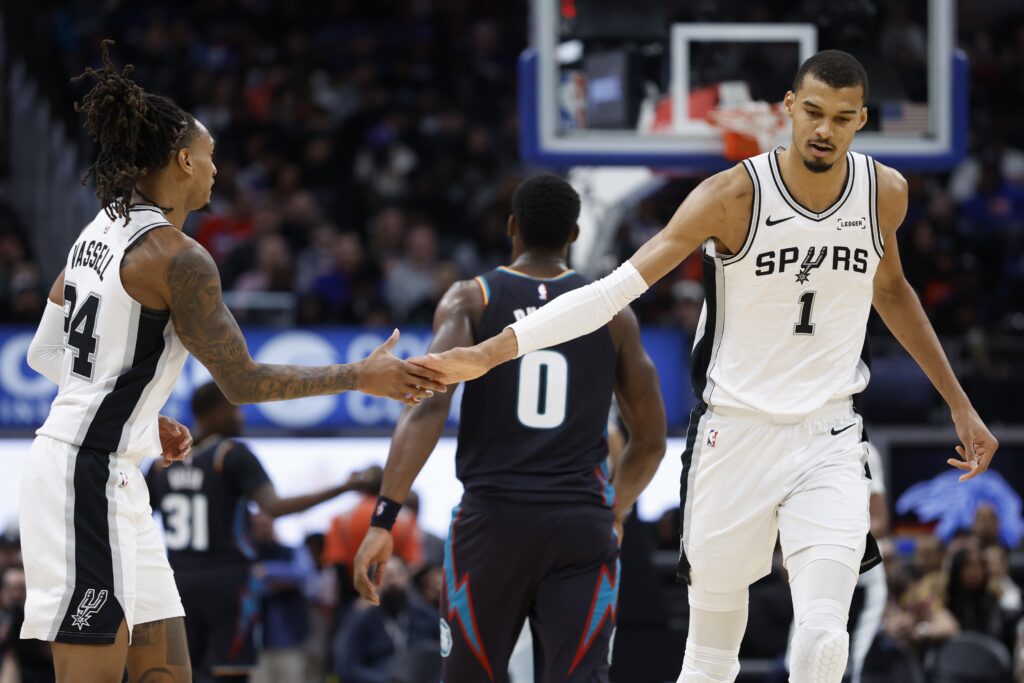
The foundation of any built-to-last team is a franchise player, and the Spurs possess the ultimate one in Victor Wembanyama. Heading into the All-Star break, Wembanyama has cemented his status as a generational talent, functioning as a “tank-proof” superstar capable of dominating on both ends. He is the ultimate problem for every other team in the league.
The Spurs’ strategy with Wembanyama is not just to win, but to keep him healthy and unguardable for over a decade. By prioritizing his long-term well-being, using smart, calculated playing time management, they are ensuring that his physical development matches his immense skill. At 7’4″, his ability to shoot, pass, and defend allows the Spurs to build a versatile offense that can adapt to any team’s defensive scheme, making the team nearly impossible to stop when they’re at their best.
2. A Young, Dynamic Supporting Core
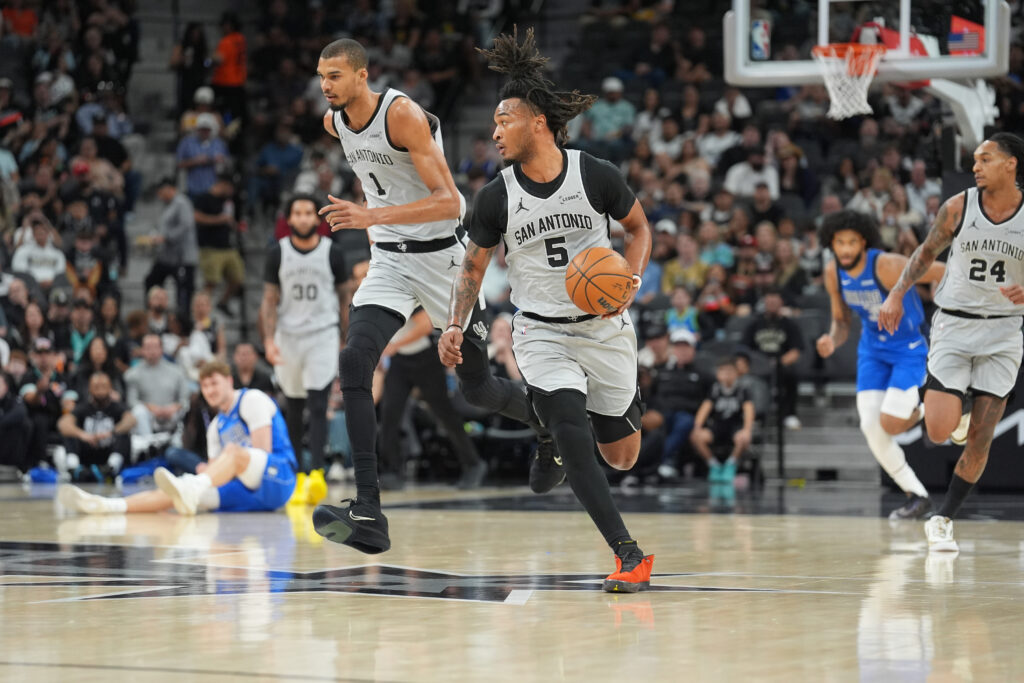
A cornerstone of this sustainable build is the emergence of a high-ceiling, young core surrounding Wembanyama. The Spurs have purposefully built around their star with young, high-character players. Stephon Castle has emerged as a high-level defensive anchor and playmaker, showing he is already a key part of the future.
Devin Vassell has taken on a critical role in increasing offensive efficiency, fixing the team’s core turnovers issue, and providing a reliable scoring threat next to Wemby. It doesn’t just stop with Castle and Vassell, as there are several other young contributors on this team. Guys like Keldon Johnson, Julian Champagnie, and Dylan Harper have all been key to San Antonio’s turnaround. Harper is a 19-year-old rookie that likely will continue to improve and be a much bigger contributor in the future.
This group is not just potential; they are proving they can produce immediately, with multiple players averaging double-digit scoring and contributing to a 50+ win pace in the 2025-26 season.
3. Financial Flexibility and Unprecedented Asset Management
While the on-court talent is young, the Spurs’ front office has maintained remarkable financial flexibility and a treasure trove of future assets. The Spurs are under the luxury tax while still being a top team in the Western Conference.
This financial freedom allows them to keep their young talent together (such as securing long-term contracts for their core) while still having the capital to make aggressive trades if needed. Furthermore, the team holds significant future draft swaps and picks from other franchises, providing a constant pipeline of young talent or trade capital to replenish the roster over the next five years.
4. A Restored Culture and Tactical Discipline
The Spurs have managed to merge the “old school” Spurs mentality of teamwork with the “new school” reality of superstar-driven basketball. Under the guidance of their coaching staff, this team has adopted a patient, disciplined approach, allowing young players to develop while veteran leaders, such as Harrison Barnes and De’Aaron Fox, provide stability.
The team has shown immense resilience, proving they can survive high-pressure scenarios, like their performance in the 2025-26 NBA Cup, where they overcame significant deficits against top-tier teams. This culture of unselfishness and dedication to a “system” means the Spurs are less likely to fall apart, creating a sustainable environment for long-term winning.
Main Image: