Penn State heads into 2026 carrying two truths that rarely coexist comfortably: the program’s ambition hasn’t moved an inch, and the road map has been redrawn. The coaching transition at the end of 2025 didn’t just change a headset. It changed the building’s tone, the recruiting pitch, and how every returning player will be evaluated.
This is what makes the 2026 season feel less like “next year” and more like a hinge in the story. The roster still has recognizable talent, Beaver Stadium still promises its annual storm, and the College Football Playoff era still tempts every contender. The question is whether Penn State can turn disruption into definition.
Penn State Football in 2026: Key Players, Expectations, and Season Challenges
A new voice, a familiar standard
Penn State hired Matt Campbell as its head coach on December 8, 2025, framing the move as the start of a new chapter with the same championship expectations. Campbell arrives after a long run at Iowa State, and the university presented him as a culture-builder as much as a play-caller.
He also sounded like someone who understands where he’s landed. In Penn State’s announcement, Campbell said, “This is one of the blue bloods of college football, and this program’s history and tradition are unmatched.” That line matters because it matches the psychology of the fan base: pride is not a garnish in Happy Valley, it’s the meal.
The quarterback question
Every new era in college football begins under center, even when the change starts on the sideline. Penn State’s most recognizable recent signal-caller is Drew Allar, the Nittany Lions’ quarterback. Whether he is the face of 2026 depends on how the offseason shakes out. We will monitor draft decisions, portal movement, and the new staff’s comfort with the room.
Campbell’s first real win won’t be a Saturday result; it will be clarity. A program stabilizes when the quarterback role is settled early enough for everyone else to stop listening for footsteps and start learning the system.
A backfield that can carry an identity
Even in an age obsessed with explosive passing, Penn State’s cleanest path to week-to-week control has often been a running game that travels. Nick Singleton, a Penn State’s running back, is one of the most established names in that conversation, with the Big Ten Freshman of the Year award in 2022 in his collection.
For 2026, the deeper challenge is not finding talent. It’s making the offense coherent. A new staff can unlock the same roster differently: tempo choices, formations that create lighter boxes, and a commitment to using the run game as a tool for stress-testing defenses rather than simply surviving downs. The best version of Penn State football is usually the version that can win ugly when conditions demand it.
Big Ten life gets wider, faster, and less predictable
The Big Ten is now an 18-team conference, and recent seasons have operated without the old divisional structure, reshaping how paths to contention are built. For Penn State, that means fewer assumptions. The opponent’s weekly style can swing from a power-run team to a spread-passing attack without much warning, and depth becomes less of a talking point and more of an oxygen supply.
Fans also experience the sport differently thanks to it. An average Saturday for Penn State’s supporters begins with dashboards, live probability, and second-screen conversation that runs parallel to the game itself. Some of them download melbet apk to follow lines and stats, treating it as an informational layer that should remain optional entertainment, while limits and discipline do the authentic coaching in the background.
The thermostat for the whole season
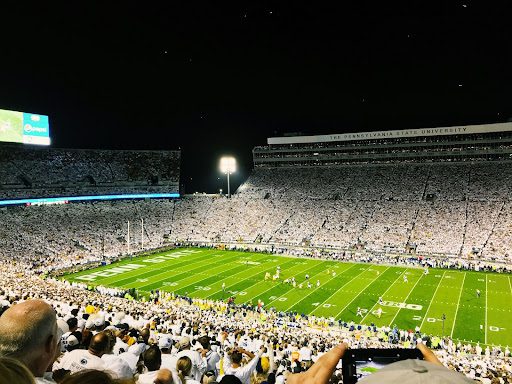
Penn State doesn’t just host games; it stages events. The White Out tradition, in which fans dress in white for select home matchups, has become one of the sport’s signature atmospheres. Beaver Stadium’s listed capacity is 106,304 as of 2025, which is big enough to feel like weather when it gets loud.
That environment is now part of the program’s business and media ecosystem. The conversation starts in the parking lots and keeps running across group chats, highlight clips, and fan pages long after the final whistle. Betting talk lives in that same current, and MelBet Facebook Somalia shows how predictions and game debates can become a social ritual. The healthy version of that culture is transparent about what it is: a layer of engagement, not a replacement for the sport itself.
Expectations in the 12-team Playoff era
The expanded College Football Playoff era is already here, with the CFP moving to a 12-team format beginning with the 2024-25 playoff. That format doesn’t guarantee anything, but it changes the pressure profile: one bad Saturday can sting without ending the season, while consistency becomes the real currency.
For Penn State in 2026, success won’t be measured by slogans. It will be measured by evidence: an offense that knows what it wants, a defense that travels, and a team that looks more settled in November than it did in September. Campbell was hired to build something durable, and the league Penn State plays in now punishes anything else.
If 2026 becomes a season of sharp edges and loud lessons, it can still be a winning seasonб provided the program turns the noise into a plan.