There’s a moment you notice it—usually midweek, somewhere between a Champions League group game and a late Sunday kickoff. A team you used to think of as “well-run but limited” isn’t just competing anymore. They’re dictating the tempo. They’re smarter, sharper, occasionally even calmer than the so-called giants across from them.
And it’s not a one-off. It keeps happening.
By 2026, the gap between Europe’s traditional elite and everyone else hasn’t disappeared. But it’s… different. Less predictable. Less hierarchical. The old order still exists, sure—but it doesn’t feel untouchable in the way it did even five or six years ago.
Something shifted. Quietly at first. Then all at once.
Not Quite Elite, Definitely Not Small
Calling them “second-tier” feels a bit outdated now, but the label still sticks for ease of reference. These are clubs that don’t have the global pull of Real Madrid or Manchester City. They don’t dominate shirt sales in Asia or break transfer records every summer.
But they’re not underdogs either.
Think Brighton & Hove Albion, Atalanta BC, Bayer Leverkusen, or Girona FC. Clubs that have spent years building something coherent—often out of necessity—and are now reaping the rewards.
They don’t always win trophies. But they’re consistently competitive. Annoyingly so, if you support a bigger club.
And more importantly, they look like they belong.
It’s Not Luck—It’s Systems
You can’t really explain this rise with a single factor. It’s more like a stack of decisions that, over time, started to align.
Recruitment is the obvious one. Clubs like Brighton didn’t stumble into success—they built a scouting network that operates somewhere between obsessive and borderline unfair. Players arrive unknown, leave for massive fees, and the cycle continues. It feels almost industrial at this point.
Then there’s coaching. The tactical gap has shrunk. A well-drilled side from outside the elite can now outmaneuver bigger teams not just occasionally, but consistently. You see it in pressing structures, in buildup patterns, in how teams manipulate space rather than just react to it.
Money still matters. Of course it does. But how it’s used matters more than it used to.
Even fan conversations reflect that shift. It’s not unusual to hear discussions about recruitment models or expected goals trends mixed in with debates over transfers or—even casually—things like odds comparisons across the best football bookmakers in the world. The game’s ecosystem has become more analytical, whether people realize it or not.
And these clubs? They’ve leaned into that earlier than most.
The Multi-Club Effect (Whether You Like It or Not)
Then there’s the part that makes people uncomfortable.
Multi-club ownership.
Groups like City Football Group have turned clubs into nodes in a wider network. Girona FC is probably the clearest example—benefiting from shared resources, loan pipelines, and a kind of structural stability that used to be reserved for top-tier teams.
It’s efficient. Maybe too efficient.
Players move through systems instead of just clubs. Data flows between organizations. Risk gets spread out. And suddenly, a team that used to fight relegation is competing near the top of La Liga.
Not everyone loves it. Some see it as a loophole, or worse, a slow erosion of competitive integrity. But ignoring its impact would be naive. It’s part of the current landscape, and it’s helping accelerate this whole “second-tier giant” phenomenon.
Case Studies That Don’t Feel Like Flukes
Take Brighton & Hove Albion. A few years ago, they were praised for playing nice football while hovering around mid-table. Now, they’re exporting talent, replacing it seamlessly, and staying relevant.
Or Atalanta BC. Their aggressive, almost chaotic style under Gian Piero Gasperini once felt like a novelty. Now it’s a blueprint others try (and often fail) to replicate.
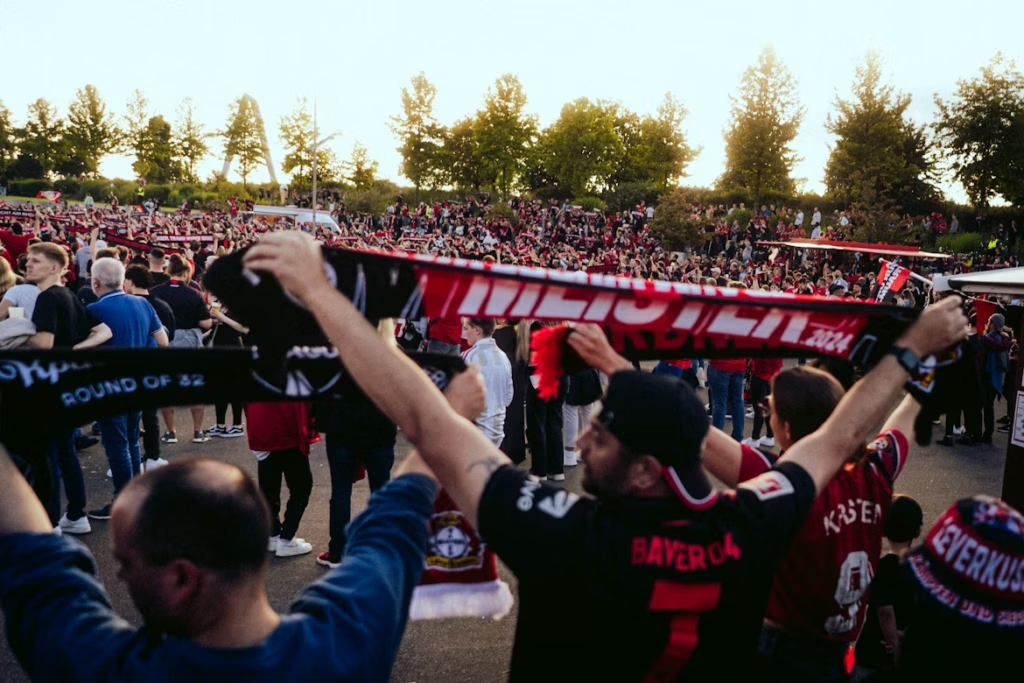
Bayer Leverkusen might be the most striking case recently. A club long associated with “almost” suddenly finds itself playing with authority—controlled, deliberate, and hard to disrupt.
And Girona… well, Girona isn’t supposed to be where it is. Which is exactly the point.
None of these feels like fairy tales anymore. They feel like systems, working as intended.
European Nights Feel Different Now
If you’ve watched European competitions over the past couple of seasons, you’ve probably noticed the shift.
Group stages aren’t as predictable. Knockout ties feel less scripted. The idea that certain clubs will simply “find a way” has weakened a bit.
That doesn’t mean the giants are fading. Bayern Munich and Paris Saint-Germain still carry enormous weight, financially and culturally. But they’re facing opponents who aren’t intimidated in the same way.
And when those opponents execute well, the gap closes fast.
There’s also a subtle change in how these matches are approached. Smaller clubs used to sit back, absorb pressure, and hope for moments. Now, they often dictate phases of play. They press high. They take risks.
Sometimes it backfires. Sometimes it doesn’t. But the intent is different.
So… Is This a New Era or Just a Phase?
That’s the tricky part.
On one hand, it feels like a structural shift. Smarter recruitment, better coaching, more data-driven decision-making—those things aren’t going away. If anything, they’ll become more widespread.
On the other hand, the financial gap still exists. Elite clubs can absorb mistakes in ways others can’t. A bad transfer window doesn’t derail them in the same way.
There’s also the question of sustainability. Can these “second-tier giants” maintain their level once their best players are inevitably sold? Some already have. Others might struggle.
And then there’s the human factor. Coaches leave. Strategies get copied. Edges disappear.
Still, something about this moment feels different. Less fragile, maybe.
A Game That Feels… Smarter
What’s really changed isn’t just who’s winning—it’s how.
Football in 2026 feels more calculated, more intentional. Even outside the elite, clubs aren’t just reacting anymore. They’re planning, iterating, adjusting.
And fans have picked up on it, even if they don’t always articulate it that way. There’s a growing appreciation for structure, for recruitment, for the kind of behind-the-scenes decisions that used to be ignored.
It doesn’t mean romance is gone. Upsets still happen. Chaos still finds its way in.
But there’s less mystery now. Less reliance on luck alone.
Where This Leaves the Giants
The elite clubs aren’t going anywhere. Let’s be clear about that.
But they’re being forced to adapt. To be sharper. Less wasteful. More coherent.
And maybe that’s the most interesting part of all this—not that smaller clubs are rising, but that the giants are being dragged into a more competitive, less forgiving environment.
They can’t rely on reputation alone anymore. Not consistently, anyway.
Which, depending on how you look at it, is either unsettling… or exactly what the sport needed.
Revolution or Not?
It’s tempting to frame this as a revolution. It probably isn’t. Football rarely changes that cleanly.
But something has shifted. You can feel it in the way matches unfold, in the way clubs operate, even in the way fans talk about the game.
These “second-tier giants” aren’t just disrupting the hierarchy. They’re quietly redefining it.