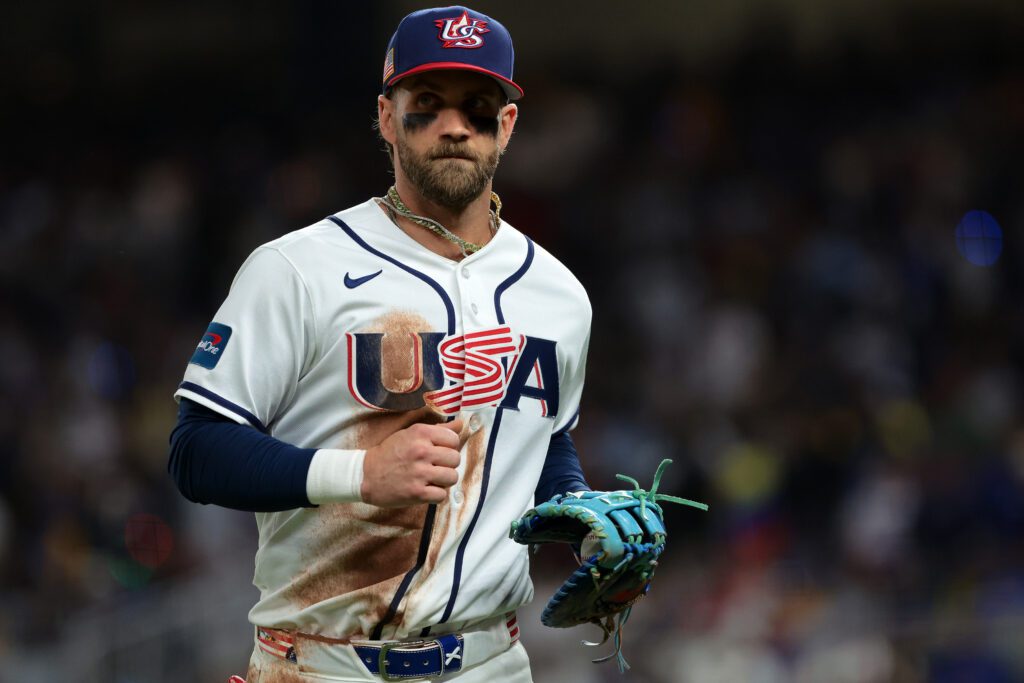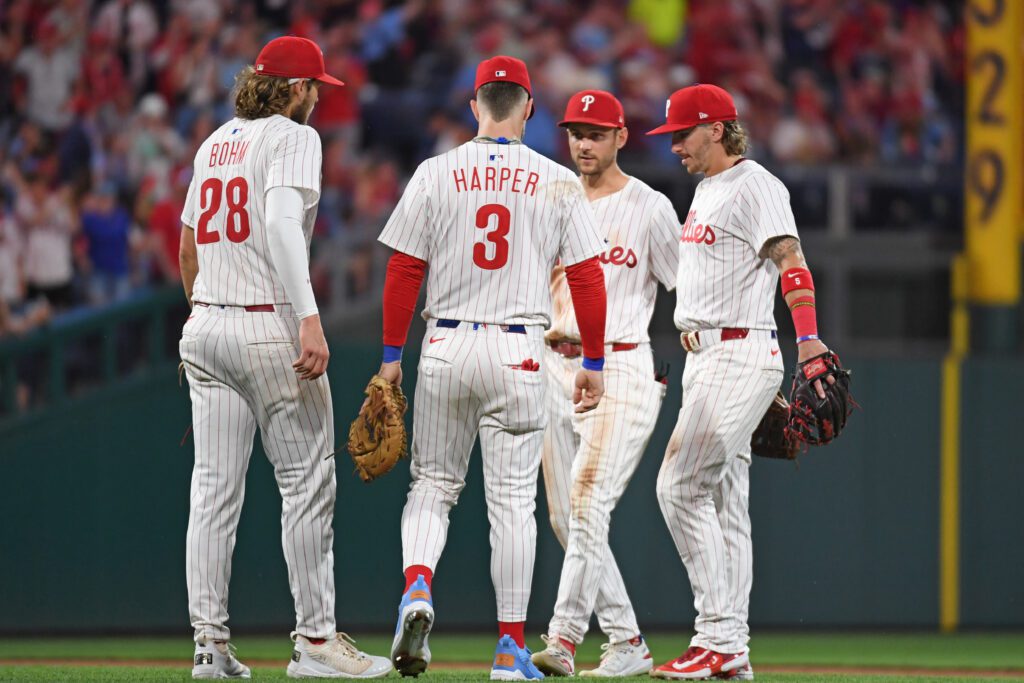
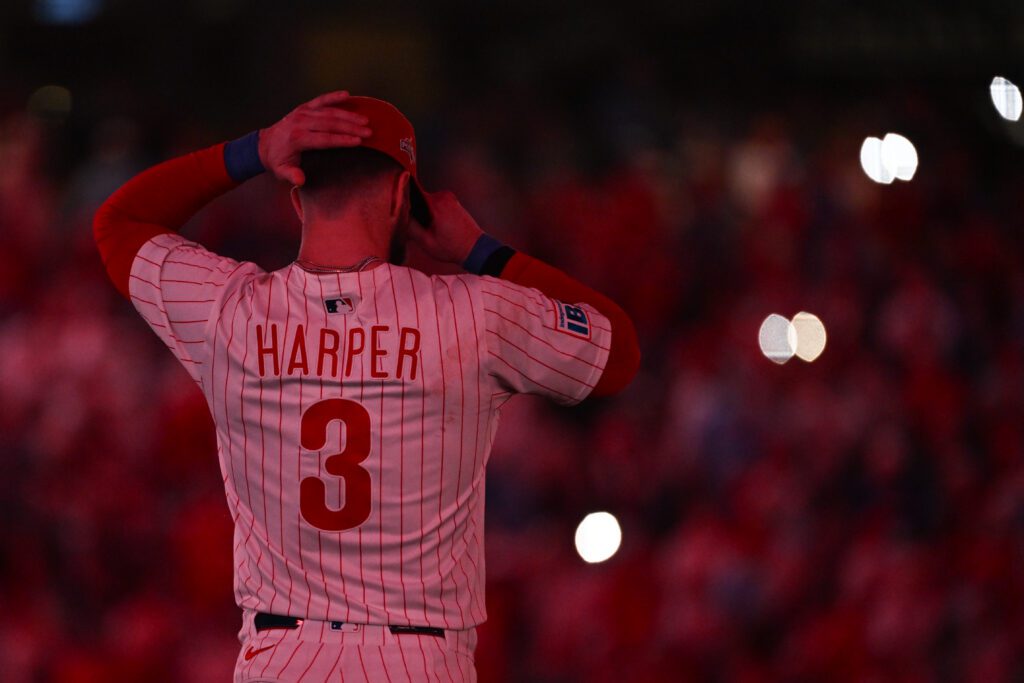
Bryce Harper has been called many different names. From “overrated” and “hothead” to “The Chosen One,” he’s no stranger to insults and accolades alike. Whether you think Harper is arrogant or the best in the league, he has been one to entertain fans loyal to either dugout.
Bryce Harper: The Evolution of “Not Elite”
Bryce Harper. When you hear that name, you may think of the player who has a slew of awards, like: two-time NL MVP, NL Rookie Of The Year, two time Hank Aaron Award Winner, NLCS MVP, Roberto Clemente Award Winner, eight-time MLB All-Star, four-time Silver Slugger Award Winner, NL Home Run Leader, NL RBI Leader, NL OPS Leader, NL OBP Leader, NL Player of the Month, NL Player of the Week, All-MLB First Team, All-MLB Second Team and Home Run Derby Champion.
He was also named the Baseball America Player of the Year, Golden Spikes Award Winner in (2010/best amateur player in U.S., at College of Southern Nevada), Baseball and USA American Minor League Player of the Year, and the top overall prospect in baseball from multiple publications before his 2012 debut.
Miles Upon Milestones
But what’s not common knowledge is that Harper is the youngest NL MVP since 1947 (age 22), the youngest player in MLB history to hit two home runs on Opening Day (2013), and one of the youngest players ever to reach 100 career home runs. He is also among the youngest players to reach 300 home runs (by age milestone tracking), reach 100 home runs before age 23, and record 100 home runs and 75 stolen bases before age 25.
Some overall milestones for Harper include 300+ career home runs, 1,500+ career hits, 1,000+ career RBI, 1,000+ career runs scored, .900+ career OPS, multiple 30+ home run seasons, multiple 1.000+ OPS seasons, and 40+ home run season (42 in 2015). With the Nationals, Harper’s 2015 season ranks among the best offensive seasons in franchise history, and, at the time, the fastest National to 100 home runs. As a Phillie, Harper was a key leader of the 2022 NL pennant team and set the Phillies’ 2022 postseason home run franchise record at six.
Not Elite? Not Offended
Harper solidified himself as one of the greats in today’s generation and has the resume to be in the Baseball Hall of Fame. However, before the season even began, controversy struck the organization. Dave Dombrowski, the Phillies’ President of Operations, questioned whether Harper could be elite again after having a down year. This sparked drama all around social media, popularizing the phrase “Not Elite”. Harper did have a down year, and even though he was 30% better than the league’s qualified hitters, speculation grew about whether Harper could get back to his MVP form. In response, Harper responded by going on social media wearing a t-shirt during his hitting workout in the cage that said “Not Elite.”
When asked about the comment Dombrowski made, he said it was “wild,” especially since the Phillies organization had agreed to keep comments in-house. Harper claimed he wasn’t looking for motivation from others; he knows how to motivate himself, and opinions like those don’t necessarily drive him. He also doesn’t feel disrespected. The issue was that the comment was publicly made instead of being kept in the clubhouse. We will truly never know which side is telling the truth about their feelings, but like Harper’s agent, Scott Boras, said, “You put gas in the tank, and the Harperi/meaning a Ferrari, works/takes off.”
The Road to Eliteness
As you may know, Bryce Harper has been a standout figure since he was seven years old, when he hit his first home run playing in the ten-and-under World Series, known for his exceptional hitting, pitching, fielding, and interviewing skills. Harper took the world by storm at 12 years old. He received his first college offer from Texas in the 8th grade. Remarkably, by the age of 13, Harper was already playing with high schoolers due to his skill and impressive physique—he stood at 6’1” and weighed 170 pounds. By age 14, Harper was already being advised by Scott Boras—a notable achievement.
Harper truly captured national attention when he graced the cover of Sports Illustrated at just 16. Dubbed “The Chosen One” and “The LeBron James of Baseball,” his popularity was so immense that he was stalked in high school. In his freshman year, he boasted a .590 batting average and hit home runs that would have reached 502 feet in an MLB stadium and 570 feet on a high school field. Scouts noted that his bat speed was so advanced it ranked in the top 10% of major league players. Sports Illustrated featured him swinging a bat with captions like “570-foot home runs” and “96 MPH fastball.” Tom Verducci remarked, “Bryce Harper is the most exciting prodigy since LeBron.”
Confident and Cocky
Eager to progress to the MLB, Harper completed his GED after his sophomore year with a 3.5 GPA and attended junior college at Southern Nevada. In his first college game, over 2,000 spectators turned up, requiring police to secure the team’s dugout. Harper was often labeled cocky. When opponents taunted him, he responded by hitting home runs and mocking them as he rounded the bases. After a poor throw that provoked the opposing team, Harper bowed, leading to his first baseball ejection. Many reports criticized his attitude, with comments like “He’s just a bad, bad guy,” and “It’s equally difficult to find one who doesn’t genuinely dislike the kid.”
Despite this, he won the Golden Spikes Award in his first year of college, leading with 31 home runs, 98 RBIs, and a .443 average, using a wooden bat. His competitive spirit showed when he swung at a pitch out of the strike zone just to secure a sacrifice fly. During the college World Series, Harper, frustrated with a call, marked the pitch location with his bat, resulting in an immediate ejection. Despite the negative fan reactions, his father described him as not cocky, but humble. Teammates and coaches echoed this, highlighting his competitiveness and passion.
Once drafted at 17, the nickname “Chosen One” gained traction. In the minor leagues, after nearly being hit by a pitch, Harper homered on the next delivery and blew a kiss to the pitcher. It was rumored that one time, an opposing catcher told him to stop pimping his home runs, or they would throw at his head. Harper told him, “F**k you, I hit the ball 500 ft, I can do what I want.”
Record-Breaking Contract Fuels the Harper
Promoted to the majors at 19, he was initially booed. Early in his major league career, Harper’s frustrations were visible, including an incident where he needed 10 stitches after hitting himself with a broken bat. His aggressive style and confrontations with umpires led to perceptions of immaturity. Harper famously responded to a question about legal drinking in Toronto with, “That’s a clown question, bro.” A Philadelphia article titled “This Is Why You Should Hate Bryce Harper” appeared just two months into his career. Not long after this criticism, Harper signed a 13-year, $330 million contract with the Phillies in February of 2019.
The deal was a record-breaking contract for the team, and now he is one of Philadelphia’s most beloved athletes ever. After signing the deal, his return to Nationals Park wasn’t pleasant. Harper was greeted with signs made by Nationals fans that said “TRAITOR” and intense boo’s. He responded by going 3-5 on the day and hit a 458-foot home run with a bat flip. Though Nationals’ fans felt a sense of betrayal as he waved to his new team from second base, the Phillies’ win that game helped convince the City of Brotherly Love that he was one of their own.
Final Thoughts
Despite mixed opinions about his character, Harper remains a central figure in baseball, dedicated to his team and the city of Philadelphia. His continued success challenges any claims of him being overrated, underscoring his status not just as a skilled athlete but as a passionate competitor driven to win. Harper admittedly loves the city and fans of Philadelphia and has stated, “If you’re not ready to play, don’t come.” Well, we’re ready! Let’s Go!
Main Image: Eric Hartline-Imagn Images