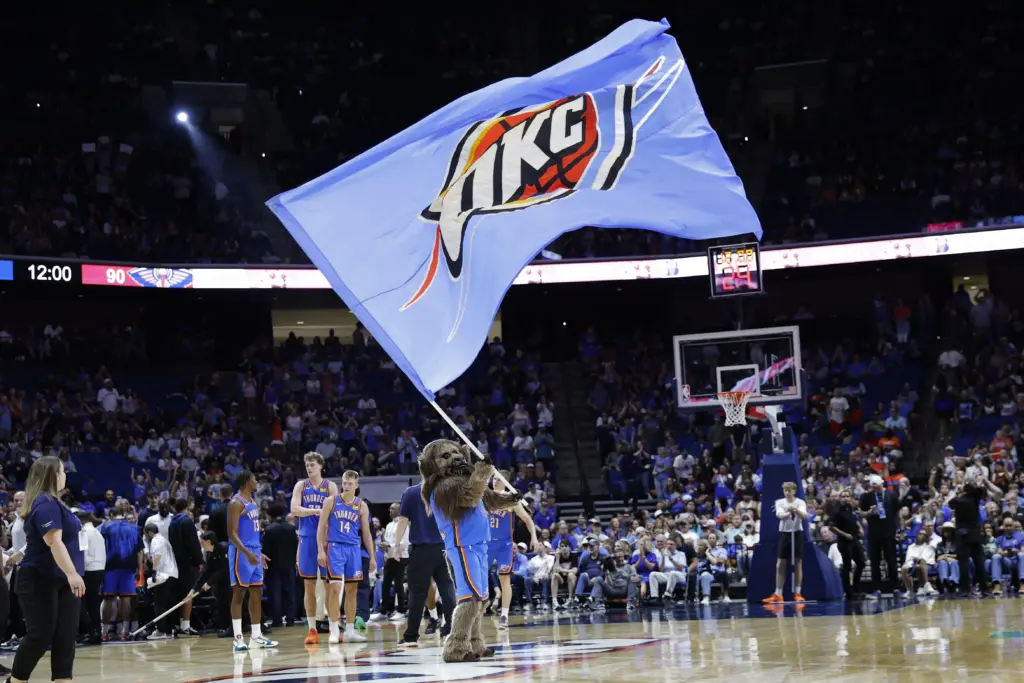
Following the departures of key rotational pieces, Luguentz Dort, Isaiah Joe, and Aaron Wiggins, via trades, the Oklahoma City Thunder enters the 2026-27 season looking to shift their identity, with Shai Gilgeous-Alexander, Jalen Williams, and Chet Holmgren leading individual and collective growth as the the team aim to reach the mountaintop once again.
Key Areas of Improvement and Outcomes For Each Player
Shai Gilgeous-Alexander
Key Areas of Improvement: Playing more off-ball & consistency in the catch-and-shoot from three-point range.
Key Outcome: Comfortable playing more off-ball to lessen offensive load and add another layer to the offense.
Jalen Williams
Key Areas of Improvement: Three-point volume & consistency as a creator.
Key Outcome: Increase volume as a three-point shooter and becoming more consistent as the Thunder’s No. 2 creator.
Chet Holmgren
Key Areas of Improvement: Redefine shooting mechanics & assertiveness.
Key Outcome: Develop a quicker, higher release point + asserting himself more to punish smaller, slower defenders to raise the Thunder’s ceiling.
Ajay Mitchell
Key Areas of Improvement: Perimeter shooting & playmaking.
Key Outcome: Handling extended minutes as a primary creator off the bench + consistency as the third creator and perimeter shooter & playmaker.
Cason Wallace
Key Areas of Improvement: Handling enhanced role.
Key Outcome: Filling the void as the primary point-of-attack defender, while taking a step forward in his perimeter shooting & offensive creation.
Isaiah Hartenstein
Key Areas of Improvement: Vertical spacing & efficiency as an offensive hub.
Key Outcome: Extending his push floater and expanding his playmaking in the offensive would not only add another layer but unlock a new element to the offense.
Alex Caruso
Key Areas of Improvement: Consistency from three-point range.
Key Outcome: Despite a historical jump from the regular season to the playoffs from three-point range. Becoming more consistent in the catch-and-shoot will create more spacing for the Thunder stars.
Jared McCain
Key Areas of Improvement: Rounding offensive game.
Key Outcome: Efficiently stepping into a larger scoring role to help replace the loss of key rotational perimeter shooting pieces.
Jaylin Williams
Key Areas of Improvement: Perimeter shooting & mobility.
Key Outcome: Continuing to enhance his perimeter shooting on increased volume will only create more spacing opportunities for the offense. Growing as a fluid defender capable of defending on the perimeter and multiple positions with the lack of a true forward on the roster to defend bigger wings, true forwards will be a season-long experiment.
Kenrich Williams
Key Areas of Improvement: Consistent perimeter shooting & defensive versatility.
Key Outcome: Consistent in the catch-and-shoot and increased volume. Adapting to an extended and larger role as a true wing with the Thunder being very thin in that specific area.
Bennett Stirtz
Key Areas of Improvement: Three-point & off-ball shooting.
Key Outcome: Stepping in and securing a spot in the rotation as an elite shooter to help replace the departure of key perimeter shooting.
Aday Mara
Key Areas of Improvement: Physicality in the paint & conditioning.
Key Outcome: Building endurance to play for extended stretches. Along with playing with force to punish teams in the paint.
Thomas Sorber
Key Areas of Improvement: Perimeter shooting & defending in space.
Key Outcome: Developing a consistent perimeter shot is crucial for the Thunder’s heavy drive-and-kick offense. Guarding switches and on the perimeter allows this team to deploy double-big lineups.
Nikola Topic
Key Areas of Improvement: Secondary playmaking & perimeter defensive playmaking.
Key Outcome: Building long stretches of healthy reps and becoming a capable secondary creator off the bench to contribute in stretches where the Thunder offense stalls, especially in the half-court.
Otega Oweh
Key Areas of Improvement: Off-ball three-point shooting & establishing defensive physicality.
Key Outcome: To secure a role on this roster. Capitalizing off of off-ball catch-and-shoots is a must as well as playing with force on the point-of-attack defensively with the departure of their tone setter in that aspect in Lu Dort.
Key Offensive and Defensive Areas of Improvement
Thunder’s Offense
Key Areas of Improvement: Offensive fluidity.
Key Outcome: Shifting away from the over-reliance on SGA’s heavy isolations and having more offensive fluidity, especially in the half-court.
Thunder’s Defense
Key Areas of Improvement: Physicality.
Key Outcome: Now going in the direction of being more offensive slanted. How certain players handle more defensive responsibilities will be vital to a team who hangs their identity on defense. Physicality will be a heavy talking point with the loss of their tone setter in that department.
Last Word
Now facing championship expectations, the Thunder must redefine facets of their identity to stay atop the league. The time is now, as everyone, from the core three, the rotational pieces, and the younger pieces, must quickly adapt and step up to shoulder more responsibility after the loss of three key contributing pieces.
Main Image: Alonzo Adams-Imagn Images