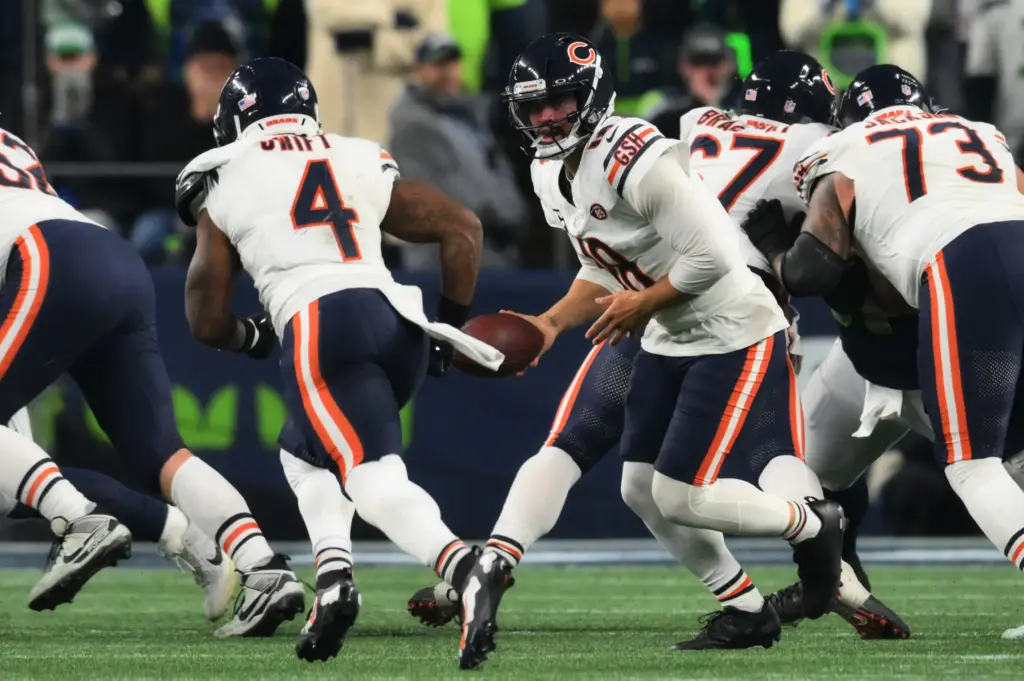
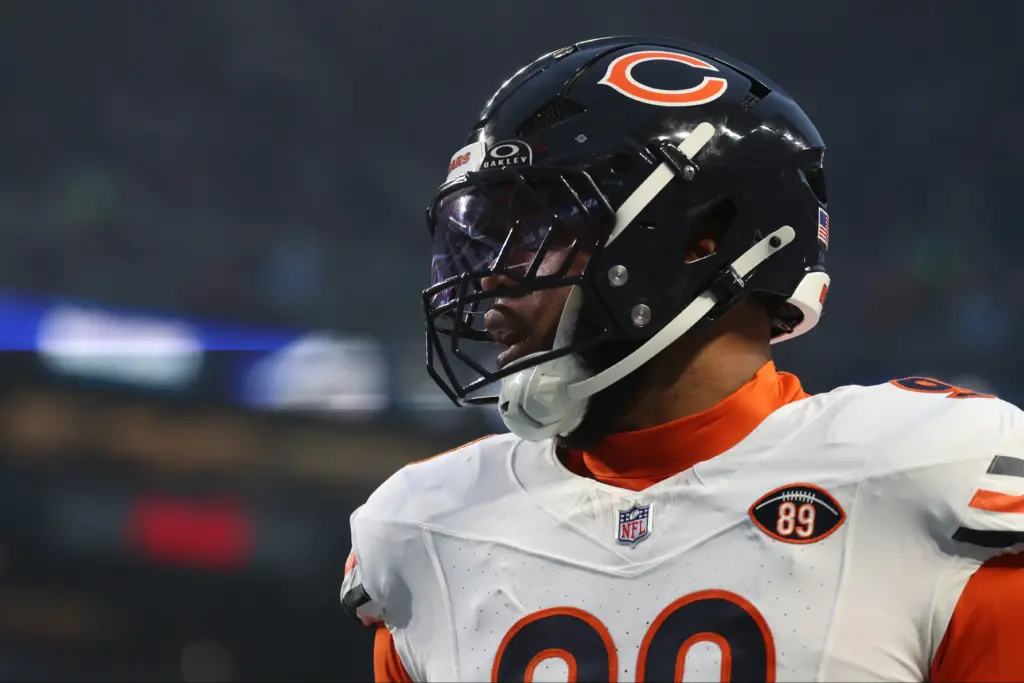
The Chicago Bears’ early-season pass rush often required extra defenders, leaving fewer in coverage. Jeffery Simmons’ debut gave defensive coordinator Dennis Allen a way to pressure quarterbacks without making that trade-off.
Simmons played 48 of Chicago’s 56 defensive snaps against the Seattle Seahawks, finishing with six tackles, including two for loss. He added a sack and a pass breakup, but his influence on protection assignments mattered beyond his own production.
All-Pro Jeffery Simmons: How Teams Block Him
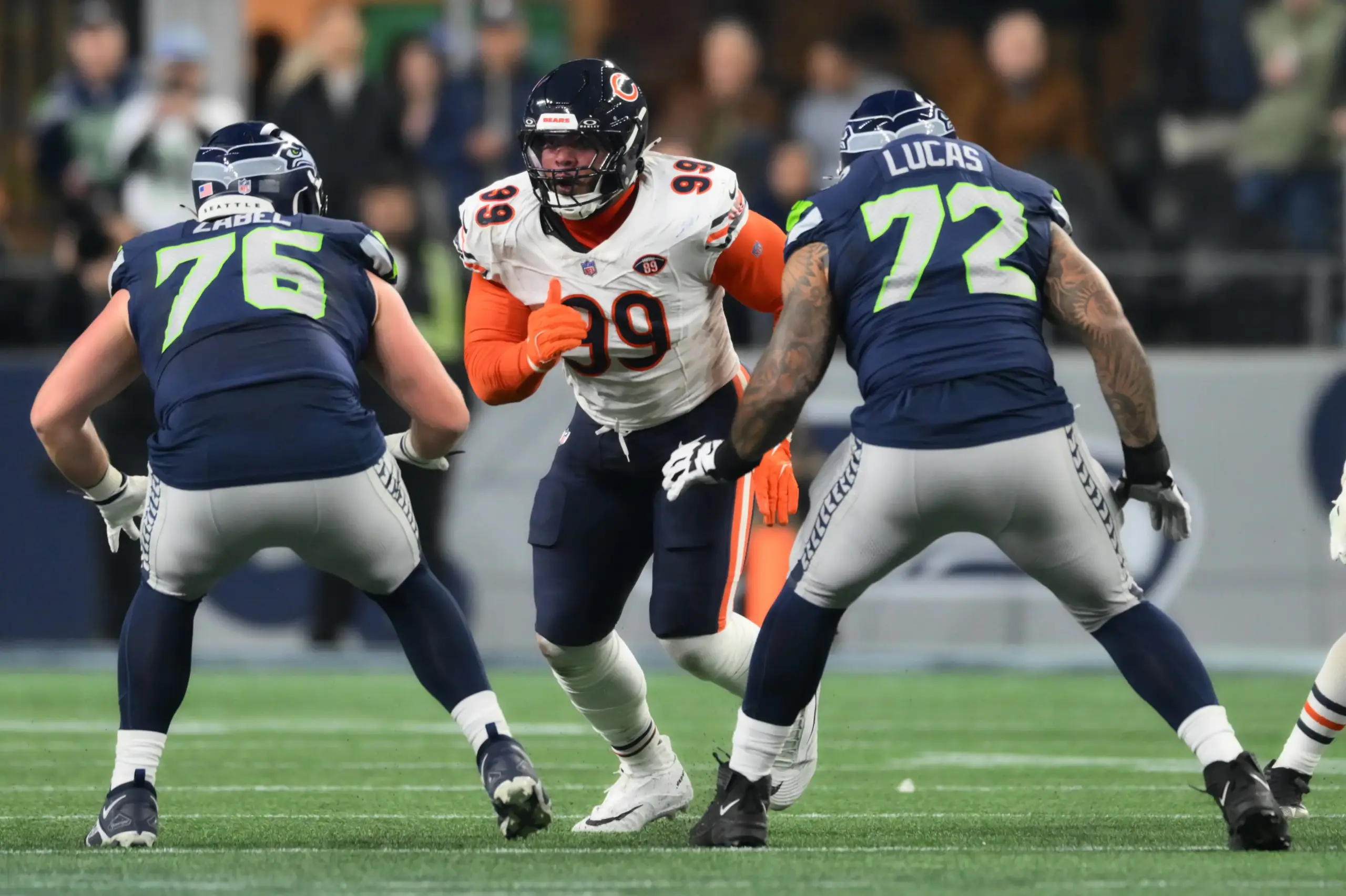
Seattle double-teamed Simmons 13 times. No other Bears defensive lineman reached 10. He still generated three pressures on 41 pass-rush snaps while occupying blockers who otherwise could have helped against Chicago’s other rushers.
The Bears lost their best interior defensive lineman when they traded Gervon Dexter Sr. to Atlanta before the season. Simmons restored a presence offenses must account for inside, even when he does not reach the quarterback.
Montez Sweat immediately benefited. His double-team rate fell to 6.5% against Seattle after reaching at least 18.8% in each of his first five games. He produced five pressures, including a sack and a tackle for loss.
Simmons changes the game by drawing the offense’s attention inward. Because he requires extra blockers in the middle, Chicago’s best edge rusher gets to face just one blocker on the outside.
Simmons Lets Four Men Get After Quarterback Without Extra Help
Rushing four allows Allen to keep seven defenders in coverage. The challenge is creating enough pressure without a fifth or sixth rusher, and Chicago managed that balance against Seattle.
The Bears blitzed on 20.5% of Seattle’s passing plays in Week 8, their lowest rate of the season. They still recorded 16 pressures and three sacks, adding an interception in the 34-17 win.
That efficiency strengthened Chicago’s case as Week 8’s biggest winner. Allen needed fewer blitzes to disrupt the pocket, giving quarterbacks fewer opportunities to exploit the coverage gaps that extra rushers can leave behind.
The benefits extended beyond Sweat. Every Chicago defensive lineman with at least 10 pass-rush snaps recorded his lowest double-team rate of the season. Four Bears defensive linemen earned pass-rush grades above 65.0.
Simmons Gives Other Players More Time
Pressure shortens the time defensive backs must cover. Generating it with four rushers also preserves the defenders available to help against receivers.
Seattle finished with 252 total yards. Sam Darnold took three sacks and threw an interception before missing Week 9 with a quad injury.
Simmons can affect those passing windows without recording a sack. Interior pressure takes away space to step up, potentially forcing an earlier throw or preventing a quarterback from waiting for a deeper route to develop.
Drawing two blockers can also free another defender to finish the rush. Either outcome can shorten a coverage assignment without requiring Allen to send another defender.
Chicago Defense Forces Tough Blocking Choices
Doubling Simmons can leave Sweat isolated on the edge or reduce help against another interior rusher. That gives Allen more freedom to select his blitzes rather than use them to compensate for an ineffective four-man rush.
Simmons earned an 83.5 pass-rush grade from PFF in his Chicago debut. His 94.4 grade ranked third among qualifying interior defensive linemen that week.
One game does not establish how future opponents will protect. Seattle actually doubled Simmons less frequently than his season rate, yet Sweat still faced substantially fewer double teams.
The early indication is that Simmons can redistribute protection help across the front without drawing an unusually high double-team rate himself.
The Last Word
Simmons’ debut showed why he belongs among the five clear winners of the Titans-Bears blockbuster. Chicago produced pressure while blitzing at its lowest rate of the season, and Sweat faced fewer double teams. Sustaining that combination would let Allen protect his secondary without conceding time in the pocket. Future opponents must find a way to handle Simmons without exposing the rushers around him.
Main Image: Joe Nicholson-Imagn Images