The Kansas City Chiefs and Las Vegas Raiders’ Week 4 clash was supposed to be a heavyweight showdown between Patrick Mahomes and Maxx Crosby. After days of trash talk, back-and-forth jabs, and plenty of hype, all eyes were on the Chiefs’ QB1 and the Raiders’ star pass rusher.
But once the pads came on, the script flipped.
It wasn’t Mahomes vs. Crosby who stole the spotlight—it was Kenneth Walker III and Ashton Jeanty. The two running backs took over the game in very different ways, turning a highly anticipated quarterback-pass-rusher battle into a showcase for the NFL’s young backfield stars.
Spotlight Switches From Mahomes vs. Crosby to Walker vs. Jeanty
Kenneth Walker’s Historic Start Is Changing Andy Reid’s Offense
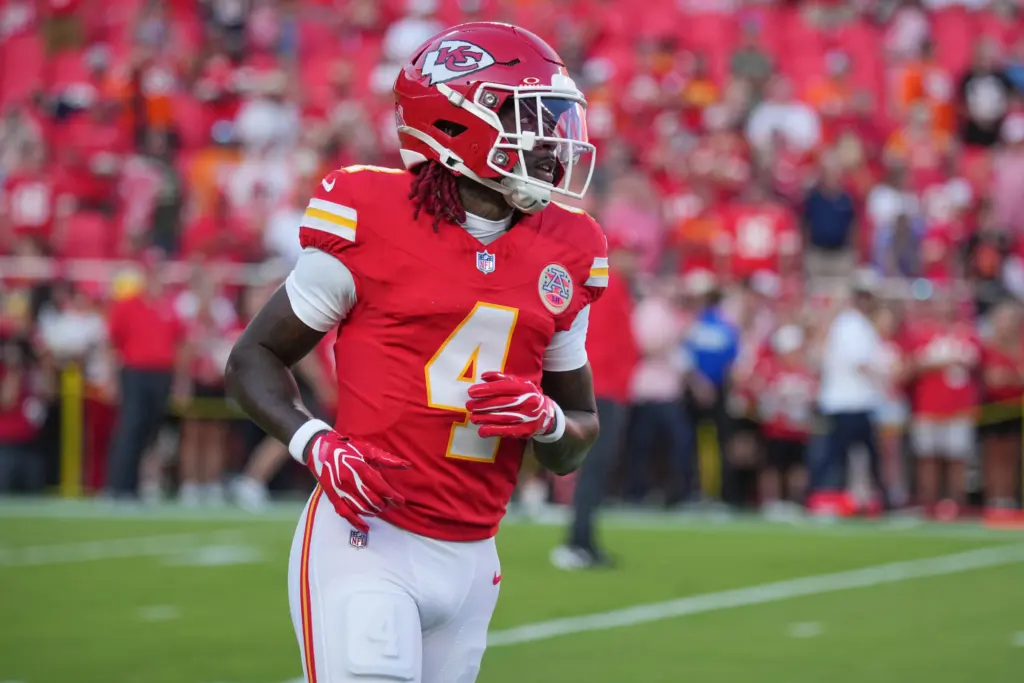
Walker didn’t just have a big day against the Raiders—he owned the ground game.
Walker accounted for roughly 94% of Kansas City’s rushing yards, racking up 177 yards on 22 carries at an absurd 8.0 yards per carry. The Chiefs finished with 189 rushing yards on 26 attempts, averaging 7.3 yards per carry as a team.
And KW9’s monster afternoon pushed him to 537 rushing yards through the first four games of the 2026 season, setting a new Chiefs franchise record for the most rushing yards by a player through the first four weeks. That’s not just production—it’s a sign of how dramatically Walker is reshaping Andy Reid’s offense.
Kansas City didn’t beat Vegas solely by putting the game on Mahomes’ right arm. The Chiefs kept forcing the Raiders defense to account for Walker, and eventually, one explosive run broke the game wide open.
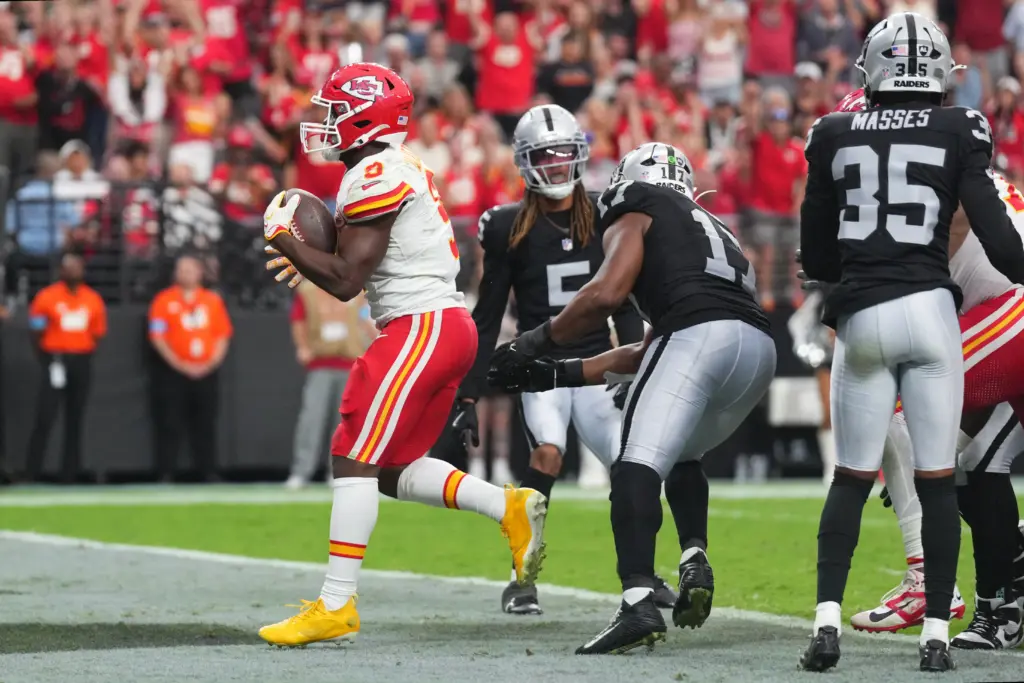
With Kansas City trailing 17-13, Walker ripped off a 76-yard house call that completely flipped the field and put the Chiefs in scoring position. A few plays later, Kansas City punched it into the end zone.
That run was the turning point.
The contrast in the box score tells the story. Walker alone finished with 177 rushing yards. The Raiders managed just 72 as a team. In other words, KW9 personally gained 105 more rushing yards than Las Vegas’ entire ground game.
That’s more than a hot hand. That’s a running back forcing an entire defense to change the way it plays.
The Raiders Needed Ashton Jeanty in More Ways Than One
Jeanty’s box score may look modest at first glance, but it doesn’t tell the story of how important he was to the Raiders’ offense.
The rookie finished with 15 carries for 58 yards (3.9 YPC) and added six catches for 68 yards, giving him 126 scrimmage yards. In fact, Jeanty finished with more receiving yards than rushing yards—a perfect snapshot of how Las Vegas had to get creative with its rookie weapon when the Chiefs’ front seven made life difficult on the ground.
The Raiders simply couldn’t get much push in the run game. Jeanty averaged just 3.9 yards per carry, and as the afternoon wore on, Vegas became increasingly one-dimensional. But Jeanty’s versatility kept the offense moving.
That showed up during an eight-minute, 15-play, 75-yard drive in the second quarter. Jeanty was part of the engine that helped Vegas control the clock, keep Kirk Cousins in rhythm and eventually march into field-goal range. Matt Gay knocked through a 32-yarder, and the Raiders headed into halftime with a 13-10 lead.
Then Jeanty came out of the locker room and immediately went back to work. On the opening drive of the second half, the rookie accounted for 41 scrimmage yards, helping the Raiders move deep into the red zone. But then came one of the game’s biggest “what if?” moments.
After a Chiefs illegal-formation penalty wiped out Gay’s field goal, Las Vegas had another shot at the points. Instead, Klint Kubiak kept the offense on the field for 4th-and-2.
The call? Get the ball to Jeanty.
Kirk Cousins’ pass fell incomplete, and the Raiders turned the ball over on downs.
Then, Jeanty appeared to have his leg or ankle rolled up late in the third quarter and briefly left the field. The timing couldn’t have been worse. Las Vegas was already trailing 17-13 after Walker’s 76-yard burst had flipped the game on its head, and the Raiders needed their rookie playmaker to answer.
For a stretch, he wasn’t there. Then Jeanty returned in the fourth quarter—and wasted no time reminding everyone why Vegas has made him such a focal point.
He ripped off 25 rushing yards on two consecutive carries, and suddenly the Raiders’ offense had some juice again. Vegas eventually stalled inside the Kansas City 5-yard line and had to settle for Gay’s 48-yard field goal, cutting the Chiefs’ lead to 17-16.
That was Jeanty’s value in this game.
He wasn’t necessarily ripping off chunk runs like Walker. He was the chain-mover, checkdown weapon and offensive Swiss Army knife who helped the Raiders stay balanced and keep their offense on schedule.
And that’s what made the contrast between the two backs so fascinating.
Jeanty brought rhythm and versatility. Walker brought the explosives.
While Jeanty kept the Raiders’ offense functioning, Walker delivered the kind of home-run plays that can completely swing an NFL game.
And ultimately, that difference mattered.
Main Image: Joe Camporeale-Imagn Images