How the OKC Thunder Can Adjust Despite Injury-Ridden Stretch
Basketball forces teams to go through many stages. One unfortunate stage the Oklahoma City Thunder have experienced for the first time is shock due to the suddenness of season-derailing injuries. With the initial shock wearing off, the Thunder have gone through a multitude of phases—dejection, exhaustion, frustration and even acceptance.
Just a few weeks ago, this team was viewed as a top-two title contender. Reality has come fast: Oklahoma City is currently 10-6, barely holding the 8th seed in the Western Conference. A 6-6 stretch in its last 12 games, and diving deeper, they are currently on a 1-4 stretch over the last five games.
The Thunder face a difficult journey ahead as they are down a pair of All-NBA Players in Jalen Williams and Chet Holmgren, and an All-Defensive guard in Cason Wallace. This comes right after a summer when the team lost some depth to stay under the second apron. Now, Oklahoma City has been bracing for Williams and Wallace to miss the remainder of the season, and for Holmgren not to return until the turn of the new year, with the hope that he returns (eight to ten weeks from October 30th).
But let’s talk about the present and ask how this team can accept the new reality of this roster and find ways to improve! The other scenario recently brought up as a realistic outcome: do the Thunder punt on the season, ultimately wasting away one of their superstars in Shai Gilgeous-Alexander‘s prime years.
The reality is, this season won’t live up to what it was supposed to be; this isn’t the outcome anyone wanted to see for the Thunder. Their championship ceiling and expectations are no longer there. The question that should be imminent is: how can the OKC adjust and make the most of their current situation?
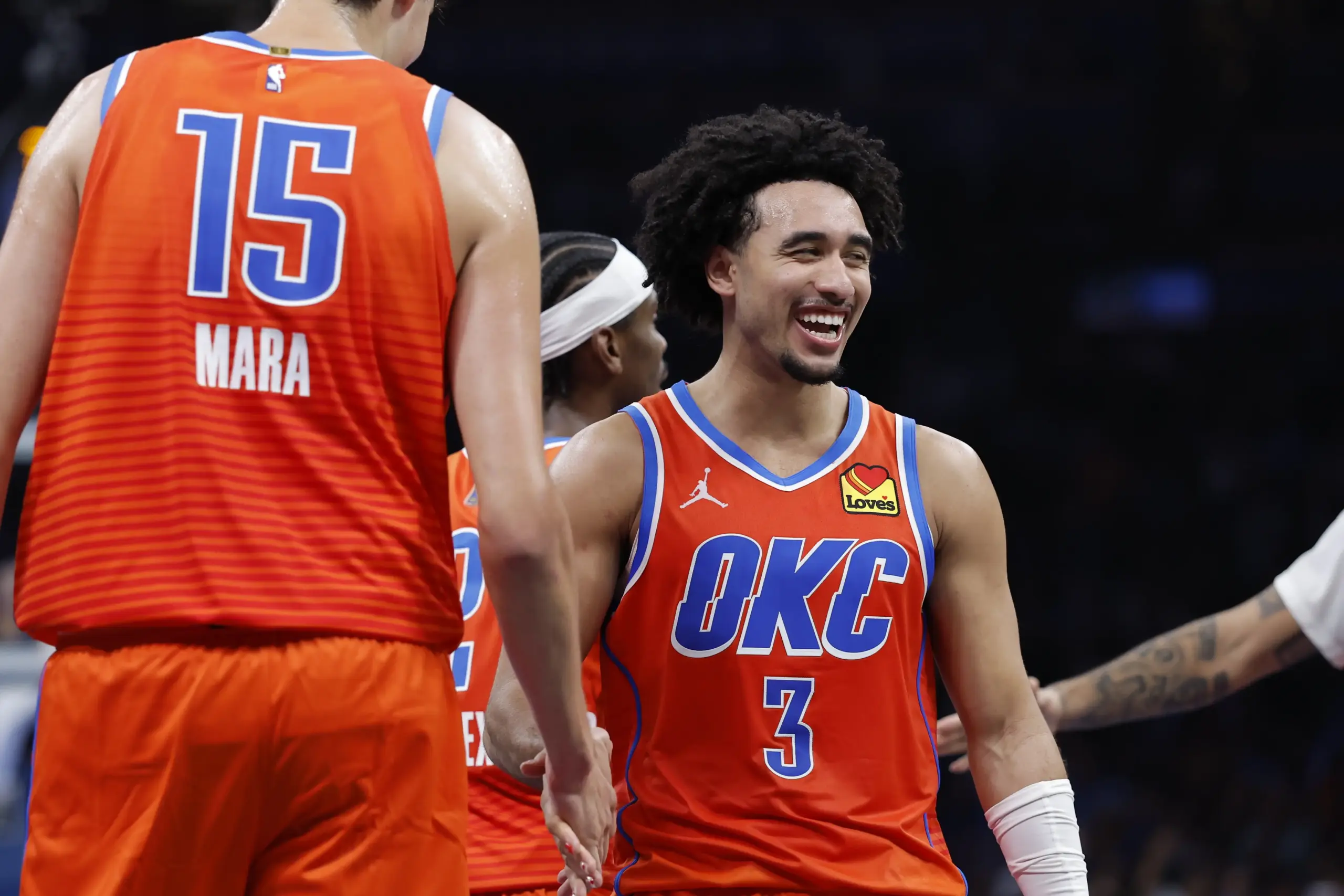
Ways the Thunder Can Adjust to an Injury-Riddled Season
There are clear limitations, and this roster magnifies them in light of these season-altering injuries. Beyond the long-term injuries, other Thunder players have already missed time, including their rising star guard Ajay Mitchell, All-Defensive Wing Alex Caruso, and pivotal backup big man Jaylin Williams. But now OKC has to adjust to its new reality instead of relying on its past identity.
The Thunder have precedents of their defense leading them to a title, built on the “organized chaos” scheme of swarming the perimeter, packing the paint, and funneling three-point shots, relying on their historic array of perimeter defenders to switch everything and contest those shots. There’s no questioning the success of the Thunder’s defensive scheme with its full cast, but this is an anomaly this season.
OKC no longer has the personnel to generate turnovers at a historic level, ranking towards the bottom half of the league in turnovers forced over this stretch. Factor that in with the Thunder getting outshot from deep in all of their losses, another area of concern. Their opponents are making 16.2 threes per game against the Thunder, while letting up a league-worst 46.3 threes per game in the last 12 games—both ranks last in the league. Their opponents are shooting 35% from deep against them, which ranks 12th, but allowing such high volume highlights a personnel issue with this roster.
The point is clear: the Thunder need to alter their schemes moving forward, as they cannot keep pace with teams’ three-point variance. Ranking 27th in threes made at 10.8 per game, 28th in threes attempted at 31.3 per game, and 22nd in three-point percentage at 34.3%.
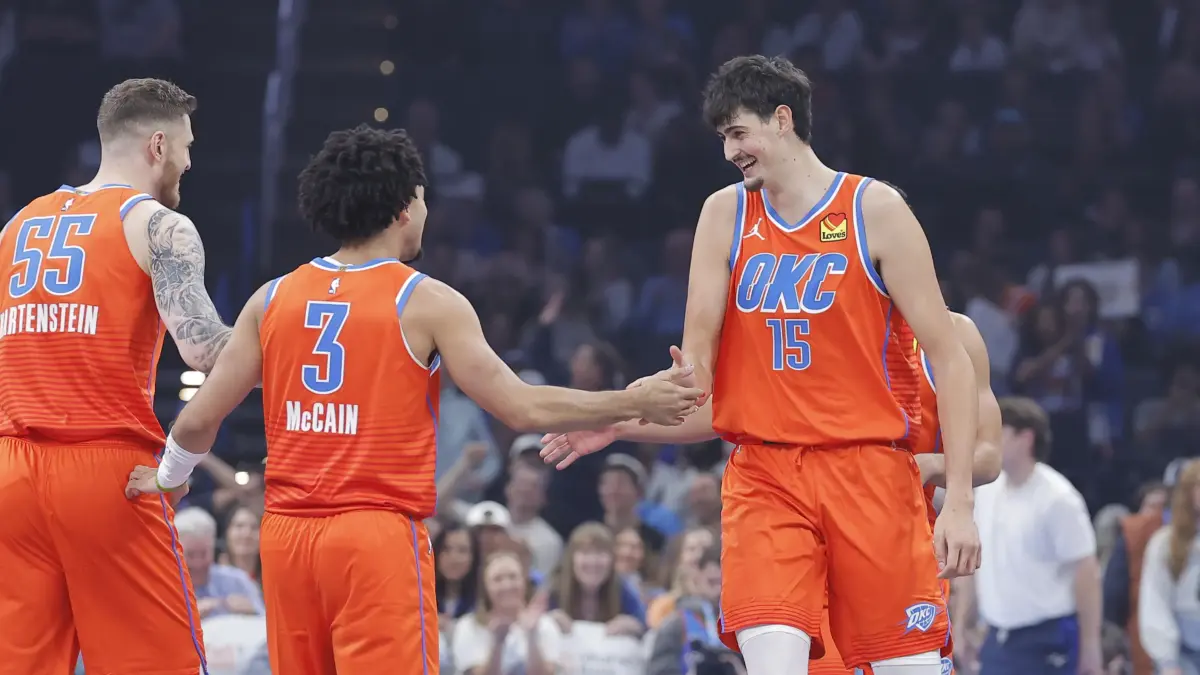
One possible way that the Thunder can adjust could be to run teams off the three-point line and funnel opponents into arguably the best collection of rim protectors in Aday Mara, Isaiah Hartenstein, and eventually Chet Holmgren. Allowing the Thunder to play the numbers game in an area in which they can match, variance inside the arc. Compared to areas where they have less chance to match — from deep.
Now, changing up their defensive approach seems like the more transferable route given the talent and personnel the Thunder have on that side, particularly rim protection; improving the offense seems less likely given the current limitations of this group.
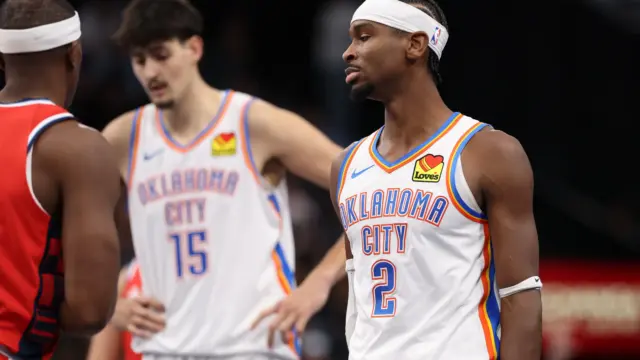
On top of placing more responsibility on SGA and expecting MVP-level production every night, the only other source of consistent offensive production is seeing Mitchell raise his aggression and increase his shot attempts as he continues to acclimate as the second option.
With the Thunder’s current product, the best offense comes from actions initiated by and ending with Mitchell and SGA, regardless of difficulty. Not only does it lead to more shots, but it also draws more attention to SGA and Mitchell, as well as higher-quality shots for their teammates.
This all stems from SGA and Mitchell being aggressive in their approaches, but it adds more pressure, and it could come at the cost of wearing the two down, the unfortunate current reality for the Thunder.
OKC, despite being decimated by injuries and how bad it feels, should not punt on the season; the path to making some playoff run is still there, as it has been in recent years, especially when Holmgren returns. The crucial part is surviving until then. These are a few adjustments that could help the Thunder stay afloat.
Main Image: Alonzo Adams-Imagn Images