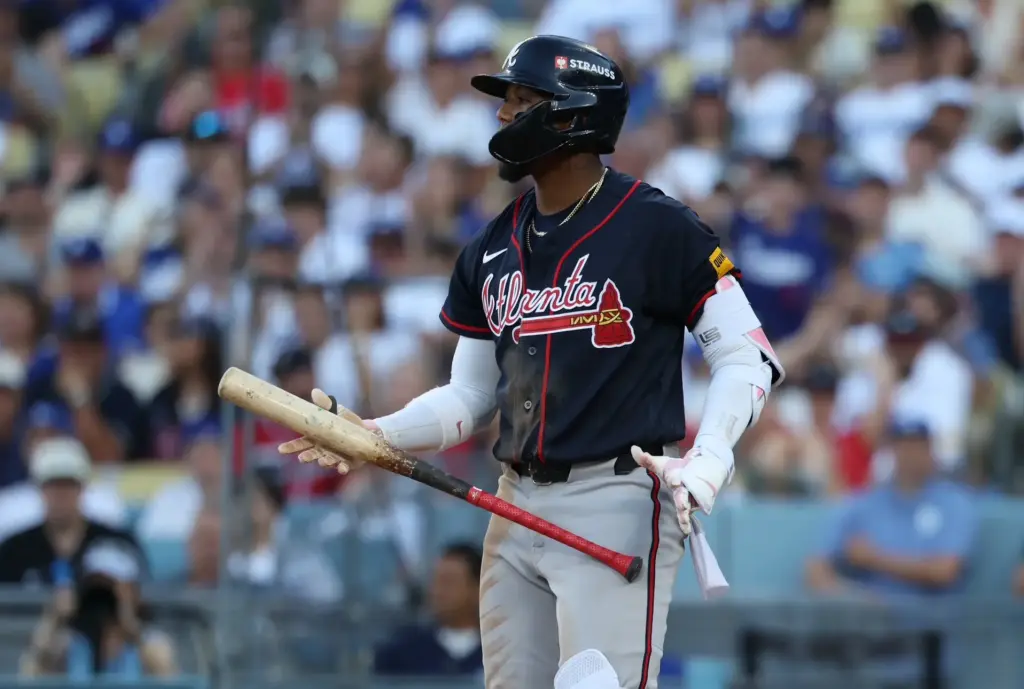
For the Atlanta Braves and their fans, October has transitioned from a month of championship aspirations to a recurring nightmare of power outages. Despite boasting one of the most feared regular-season lineups in baseball, the Braves’ offense has once again watched its postseason ambitions crumble under the weight of a staggering autumn slump.
When the temperature drops and elite pitching dominates the narrative, the high-octane, home-run-reliant formula that carries Atlanta through the grueling summer months evaporates. If the organization wants to reclaim its elite status near the top of the baseball world, the front office and coaching staff must implement three major tactical and philosophical improvements to ensure the Braves’ offense is actually built for October success.
Three Major Adjustments the Braves’ Offense Must Make
1. Dethroning the “Three True Outcomes” and Embracing Two-Strike Adaptability
For years, the Braves’ offense has built its identity on the long ball. While ranking near the top of the league in slugging percentage looks great in July, it creates a highly volatile ecosystem in the postseason. When facing elite, high-velocity relief pitching and sharp breaking stuff, an unyielding commitment to the “Three True Outcomes”, which are home runs, walks, and strikeouts, routinely paralyzes the lineup.
To break the cycle, the Braves’ offense must develop an organizational approach to two-strike hitting and situational contact. Too often in elimination scenarios, Braves’ hitters continue taking massive, upper-cut swings with two strikes, which, combined with astronomical chase rates on sweepers outside the zone and high fastballs is a recipe for disaster.
The hitting philosophy must evolve to prioritize putting the ball in play when down in the count. This means shortening strides, choking up on the bat, and using the entire field rather than selling out for pull-side power. Moving the line forward forces defensive mistakes, something the Braves’ offense rarely benefits from when it is busy striking out eight or nine times a game.
2. Solving the Runners in Scoring Position Execution Crisis
A defining characteristic of recent October exits has been the inability of the Braves’ offense to manufacture runs when a home run isn’t on the menu. Leaving a small village on the basepaths night after night deflates a team’s energy and puts insurmountable pressure on the pitching staff.
Improving situational execution requires structural changes in player mindset. The Braves’ offense must value the “boring” aspects of baseball. Advancing a runner from second to third with no outs via a groundball to the right side cannot be treated as a wasted at-bat. With a runner on third and fewer than two outs, the goal should simply be elevated contact or an aggressive line drive, not an attempt to clear the stadium. A line-drive single or a deep sacrifice fly scores the run just as effectively as a 450-foot blast.
3. Diversifying Lineup Roles and Adding Profile Flexibility
The modern configuration of the Braves’ offense is notoriously uniform. It is built almost entirely of heavy-hitting, power-first bats from top to bottom. While this creates a relentless wave of power on their best days, it lacks a “Plan B” when a dominant ace shuts down the long ball.
The front office must prioritize dynamic lineup flexibility in the coming offseasons by adding profile diversity to the Braves’ offense.
Atlanta desperately needs a premier, high-contact tablesetter who thrives on high on-base percentages and low strikeout rates. Having a threat who can foul off tough pitches, work deep counts, and consistently find their way aboard changes how opposing managers deploy their bullpen. Adding a player like Mauricio Dubon was a step in the right direction, but it will take a few more players with a similar style to his before the Braves notice a true difference in their style of play.
The Braves could arguably use more speed as well. Speed forces pitchers into rushed deliveries and creates defensive panic. Incorporating genuine baserunning threats who can steal a base or take an extra bag on a single introduces an element of chaos that keeps playoff opponents off balance.
The Path Forward
Another October collapse by Atlanta’s lineup proves that talent alone cannot override a flawed postseason approach. The definition of insanity is repeating the same free-swinging, power-reliant script every autumn and expecting a different outcome.
By demanding two-strike adjustment, holding hitters accountable for situational execution, and injecting a much-needed dose of contact and speed into the roster, the organization can finally build a Braves’ offense capable of weathering the October chill. Until these changes are made, regular-season dominance will continue to be a prelude to postseason heartbreak.
Other teams can certainly say that they have issues on offense that they need to address as well, but this has been a problem for Atlanta for several years now and the reality is that this is just who the Braves are. If this core is not willing to make the changes that are necessary to succeed in October, then it may be time to make significant changes to the roster.
Main Image: Kiyoshi Mio-Imagn Images